Those who want to sacrifice liberty for a little security deserve neither liberty, nor security. Awaken Your Dormant Conscience! Give me liberty or give me death! Winning your inner struggle as a "Free Being" against your nihilistic identity of "being Chinese".
那些想用放弃自由去得到安全感的人们既不值得自由也不会得到安全感。 唤醒你沉睡的良知!不自由,毋宁死!开始并赢得一场你内心的“自由人”搏击你外在的“中国人”的文化反思反省浪潮。 “自由人”必胜! “中国人”必败!
Contact Kai Chen 联络陈凯--电邮信箱 Email:elecshadow@aol.com 电话 Phone: 661-367-7556
"Using poison to subdue poison" is deep in the Chinese cultural habit, as is in the cultural habit of Islamic world. Excessive tolerance of evil in every day life in such societies leads to regressive "rebellions and revolutions". More cruel despotisms often replace the old despotisms: USSR, China, Cuba, Iran and today's Egypt are all such examples. ------------------------------------------------------------------------------- Dictatorships and Revolutions 专制暴政与蜕变革命/埃及
Posted by Nonie Darwish
on Jan 31st, 2011 and filed under Daily Mailer, FrontPage.
The pressure in Egypt has been building for a long time and has now finally exploded – inspired by the events in Tunisia. The fact that the Egyptian government has been taken by surprise is a sign of how disconnected the regime has become from the reality on the ground. Mubarak has wasted many opportunities to transfer power to another administration peacefully. He could have gone down in history as the first Arab leader to conduct a fair election, but instead, he kept ignoring the inevitable and kept re-electing himself for 30 years, followed by grooming his son to take over. Now he will go down in history as just another Arab tyrant in the dysfunctional political history of the Muslim world.
Having been born and raised in the Muslim faith during the generation of the 1952 Egyptian revolution, in which my father held a prominent role in the Nasser revolutionary government of that time, I see things repeating themselves. The Nasser 52 revolution promised freedom, democracy, Arab Nationalism and self-rule. Nasser toppled what he called the tyrant King Farouk, promised a new era of freedom, democracy and prosperity, but ended up giving Egyptians more of the same. The era of Nasser was one of the most oppressive periods in Egyptian history, ushering in a long period of wars, socialism, poverty, illiteracy, and a police state.
Judging from Arab history, revolutions do not necessarily bring about democracy or freedom. Will the current Egyptian uprising bring what it was intending to bring? Or will it end up in a vicious cycle of uprising and tyranny following the footsteps of the earlier 52 revolution? In a recent poll, over 70% of Egyptians stated that they want to live under Sharia Islamic law. And most of these people do not understand that Sharia law will result not in a democracy but in a theocracy like Iran or Saudi Arabia. That unrealistic expectation by the majority of Egyptians will probably end up in a great disappointment — the same way the Iranian revolution could not deliver the freedom and democracy the Iranian people had hoped for. Many Egyptians chant “Allahu Akbar” and “Islam is the solution.” But the truth is, Islam or more accurately, Sharia, is the problem.
The Muslim Brotherhood, which is entrenched in Egyptian society, has announced that it is currently in talks with Mohammed ElBaradei – the former UN nuclear watchdog chief – to form a national unity government. They have chosen to ally themselves with a well known moderate international figure which might make them more acceptable to the moderates and reformists in Egypt. The Muslim Brotherhood will use the democratic process to come to power but the true nature of the Brotherhood will come out as soon as they take power. According to their basic beliefs, they must rule according to Sharia, which is the official law of Egypt anyway. Perhaps the most dangerous law in Sharia that stands in the way of democracy is the one that states that “A Muslim head of State can hold office through seizure of power, meaning through force.” That law is the reason every Muslim leader must turn into a despotic tyrant to survive, literally. When a Muslim leader is removed from office by force, we often see the Islamic media and masses accept it and even cheer for the new leader who has just ousted or killed the former leader, who is often called a traitor to the Islamic cause. Sadat’s assassination followed many fatwas of death against him for having violated his Islamic obligations to make Israel an eternal enemy. He became an apostate in the eyes of the hard-liners and had to be killed or removed from office. This probably sounds incredible to the Western mind, but this is the reality of what Sharia has done and is still doing to the political chaos in the Muslim world.
Westerners often described the Mubarak administration as secular when in reality it is not. It is true that Mubarak comes from a military background and neither he nor his wife wear Islamic clothes. But no Muslim leader can get away with or even survive one day in office if he is secular in the true sense of the word. It was during Mubarak’s rule in 1991 that Egypt signed the Cairo Declaration for Human Rights stating that Sharia supersedes any other law. So even though Sharia is not 100% applied in Egypt, it is officially the law of the land. Mubarak, like all Muslim leaders, must appease the Islamists to avoid their wrath. According to Sharia itself, a Muslim head of state must rule by Islamic law and preserve Islam in its original form or he must be removed from office. That law leaves no choice for any Muslim leader. Because of that law Muslim leaders must play a game of appearing Islamic and anti-West while trying to get along with the rest of the world. It’s a game with life and death consequences.
The choice in Egypt is not between good and bad, it is between bad and worse. Many in the Muslim world lack the understanding of what is hindering them as well as a lack of a moral and legal foundation for forming a stable democratic political system. I fear that my brothers and sisters in Egypt will end up embracing extremism instead of true democracy and thus will continue to rise and fall, stumble from one revolution to another and living under one tyrant to another looking for the ideal Islamic state that never was. The 1400 year-old Islamic history of tyranny will continue unless Sharia is rejected as the basis of the legal or political systems in Muslim countries. Sharia must be rejected if Egyptians want true democracy and freedom.
-- Nonie Darwish is the author “Cruel and usual Punishment” and the President of FormerMuslimsUnited.org.
陈凯再版:抑制专制必建立强大个体民间 Kai Chen Reprint: Empower Individuals to Combat Tyranny
“自由人”对抗“中国人”序列 “Free Beings" vs. "Chinese" Series
价值一语:
We reject the idea that any American is a "common man." No man is "common" and no man is "average" in the sight of God. This is the faith on which we base our mission for human freedom. --- Arthur B. Langlie
我们反对这样的说法: 一个美国人只是个普通人。 在上苍的眼中没有任何一个人是普通与平凡的。 这就是我们为人类自由奋斗的信仰基点。 --- Arthur B Langlie
"Democracy" without individual freedom is only another word for tyranny. In China's despotic culture that worships collectives and destroys individuals, a dynastic tyranny is only a logical and necessary result. Those who have no individual identity but only an identity of "being Chinese" will do everything to perpetuate this man-eating dynastic cycle.
陈凯再版:抑制专制必建立强大个体民间 Kai Chen Reprint: Empower Individuals to Combat Tyranny
Kai Chen 陈凯 1/30/2011 reprint (Written 9/5/2006)
Can we have a true democracy based on individual freedom without strong and independent individuals? What would happen if we replace the current Chinese despotic government that is based on collectivism with another government that is based on the same principle of "collectives above individuals"? Can a true democratic government be established and continue to survive without a strong, individual-based civil society? Can a crowd of self-effacing, self-demeaning, self-castrating small men form the basis of a great human society that values life, liberty and pursuit of happiness?
All these questions must be answered before we start our quest for freedom, justice and a democratic form of government.
Today there is an article on the LA Times about Chinese Cyber-Vigilantism (people set up certain individuals for persecution without court proceedings -- not a surprise since China has never had independent judiciary), coupled with the current events in Taiwan in which democratic institutions are not respected and a form of "Mob Rule" is in full swing to overthrow a democratically elected president. One does not need great intelligence to conclude that only in a society with weak and crippled individuals such phenomena can happen.
A strong civil society must emerge and be strengthened if a true democracy is to survive. And free, strong individuals with unshakable faith and capability to reason with logic and rationality must form the foundation of such a civil society. Then what is an empowered, strong, free and rational individual?
1. He/she must have strong faith in his own conscience -- God, so that he will not be swayed by the tide of time and crowd. 1. 他/她必须有对道德良知--上苍的坚定信仰。 真实与正义的原则是不会因时间的流逝与人数的多少而改变的。
2. He/she must be courageous facing overwhelming odds in overcoming difficulties to strive for justice. 2. 他/她必须有道德勇气为了自由与正义去面对似乎不可克服的困境与似乎不可战胜的敌人。
3. He/she must be independent in judging what right or wrong is based on moral absolutes. 3. 他/她必须是一个独立思考基道德原则去鉴别是非、真假、对错与正邪的个体。
4. He/she must be intelligent enough to recognize facts from fantasies, truth from falsehood, reality from illusion... Common sense is his weapon. 4. 他/她必须有基本的逻辑理性思维并能用简单常识性思考去识别幻觉与真实现状,去识别骗子与诚实者。
5. He/she must be tolerant to differences while fighting without compromise against evil. 5. 他/她必须懂得容忍不同的美德与绝不容忍邪恶的道德清晰。
6. He/she must treasure life, liberty and pursuit of happiness, and reject all temptations based on Power. 6. 他/她必须将永恒的价值--生命、自由与对真实幸福的不懈追求作为自身的言行准则,并回绝所有强权/权力的诱惑。
Only with such strong, empowered individuals (we often call them Americans), human progress toward better tomorrow can be possible. Everything starts from only one - you and I. Anything that starts with government, with crowds, with a mysterious cultural habit and tradition can only be counter-productive, not to mention it is by nature regressive, repressive and reactionary.
Do not follow the crowd, follow your own conscience and mind. Do not fear the crowd, fear only God. Do not be a slave of your own culture, tradition, government, environment, be the master of them. Do not be passive when encountering obstacles and difficulties, be brave to take actions, be the engine with a compass to push history forward into a better future.
I indeed have such faith in humanity, in each and every individual human being, in you and me and in God.
The instability of the Chinese society and the precariousness of the China's communist regime is clearly depicted in this cartoon video. Today any incident in China, small or big, has the possibility to get out of hand and topple the communist regime.
Rabbit Film Satire Axed 小白兔咬老虎漫画片被禁
RFA
2011-01-27 Censors ban an animated video which bashes China's human rights record. A screen grab from the video, originally posted on Tudou.com, shows a baby rabbit drinking tainted milk formula.
A violent animated film depicting an unjust world in which rabbits revolt against their tiger overlords has been deleted from a Chinese video-sharing website ahead of the Year of the Rabbit, its creator said.
"It has been deleted," said director Wang Bo, who created the South Park-style cartoon, which features babies poisoned by toxic milk and rabbit children run over by tigers.
"It's probably because the cartoon is very violent," said Wang, whose film references the recent Sanlu tainted milk scandal, which sickened thousands of infants, and the death of a Hebei college student hit by the car of a 23-year-old police chief's son.
"I don't know how other people will see this," Wang said. "But the inspection authorities frequently delete things that I create."
A Chinese video, featuring barely disguised satire of today's authoritarian regime, disappears without explanation.
"Of course I don't like to have my stuff deleted, but maybe it broke one of their rules ... I'm not sure exactly which rule ... There's not really much I can do about it," Wang added.
But other commentators said the gruesome content pointed at real problems in today's China, and gave vent to simmering public anger over widespread official corruption and shoddy safety standards.
'Background of social realism'
The cartoon went viral on video-sharing sites in recent days, suggesting it touched a nerve with Chinese netizens.
"I have seen this cartoon," said Ai Xiaoming, literature professor at Guangzhou's Zhongshan University. "I thought it was extremely clever. Everything that happens in it is the sort of thing that people today are worrying about."
"It was made against a background of social realism, and especially the anger depicted," Ai said. "They have turned people's real feelings about events into a whole meaning system."
"They have managed to express things which people are unable to express in any other way."
Guangxi-based author Jing Chu said the authorities appeared to be stepping up controls over the Internet, inhibiting ordinary people's freedom of expression in favor of social stability.
"I saw the rabbit cartoon. It exposes a number of problems which we find in contemporary Chinese society," Jing said.
"The authorities are controlling the Internet ever more tightly now, because they are afraid."
"The government has always relied on lies and terror to control China, [but] sometimes on the Internet you can still see something authentic."
Creating 'a pressure cooker'
Jing warned that suppressing the Internet as the last forum for free expression would lead to greater social instability.
"If you close off every possible [outlet] then it turns into something like a pressure cooker, which is extremely worrying," Jing said.
The cartoon opens with baby rabbits who die horribly from drinking "Sanlu" milk formula, made by the now-defunct Chinese dairy giant that was at the center of a huge scandal in 2008 over tainted milk.
The milk was blamed for killing six infants and sickening 300,000 others.
The rabbits in the video refer to the Chinese Year of the Rabbit, which begins on Feb. 3, while 2010 was the Year of the Tiger.
At the end of the video, the rabbits stage a mass uprising against the tigers, sparking general bloodbath.
Reported by He Ping for RFA's Mandarin service. Translated and written in English by Luisetta Mudie.
Worshipping power from despotism/tyranny and dismissing freedom with individual responsibility is a typical mindset of a "Eunuslawhore" (eunuch, slave, whore rolled in one), from the likes of artist Lang Lang, to the like of athlete Wang Zhizhi, to the likes of Norman Hsu (Hacienda School Board member). Their mentality has been formed/warped by Confucian despotism. They live in a free country, but yearn for the anti-human anti-values and anti-freedom life styles of the largest slave state in human history-China.
Segment of the article 文章节略:
"Well, nice going, Lang Lang. In and around every dictatorship, there are official artists. The Nazis had them, the Soviets had them — all the worst have them. Lang Lang has chosen to be an official artist."
Last week, I had a note in this space about Lang Lang, who has become a kind of court pianist for President Obama and the Chinese leadership — the Chinese dictatorship, to put it more bluntly.
He played at the Beijing Olympics. He played at Obama’s Nobel ceremony. He played at the White House event for Paul McCartney — the one at which McCartney made a ridiculous anti-Bush crack, which caused Lang Lang and the Obama crowd to laugh like hyenas. And he played at Obama’s state dinner last week for Hu Jintao.
What did he play? Most notably and significantly, he played a famous anti-American propaganda song. Famous in China, that is. Wei Jingsheng, the great Chinese democracy leader, exiled in the United States since 1997, wrote a letter to Congress and Secretary of State Clinton. He said, “I listened to that music with a big shock.” Wei explained that the song, “My Country,” or “My Motherland,” comes from “the best-known Communist propaganda movie about the Korean War,” depicting the Chinese army’s fight with the Americans. The movie is called The Battle of Triangle Hill. Wei said that the movie is as well-known in China as Gone with the Wind is here.
The song refers to the Americans as “wolves” or “jackals,” and says that the Chinese will use weapons to deal with them. Wei commented, “Is that not an insult to the USA to play such . . . music at a state dinner hosted by the US President? No wonder it made Hu Jintao really happy.” Yes, no wonder. As Wei pointed out, Hu is not ordinarily given to public emotion, but he emotionally embraced Lang Lang.
An article in the Epoch Times reports on an interview that Lang Lang gave to a Hong Kong-based TV outlet. He said that he himself chose to play that song. “I thought to play ‘My Motherland’ because I think playing the tune at the White House banquet can help us, as Chinese people, feel extremely proud of ourselves and express our feelings through the song.” The act of playing this song at the White House will have, and has had, an effect that most Americans would find difficult to comprehend.
The Epoch Times quotes a Chinese psychiatrist living in Philadelphia, Yang Jingduan: “In the eyes of all Chinese, this will not be seen as anything other than a big insult to the U.S. It’s like insulting you in your face and you don’t know it, it’s humiliating.” In his letter, Wei said that so-called patriotic Chinese — supporters of the Communist party and the dictatorship — were ecstatic over “My Motherland” at the White House. One such “patriotic Chinese” exclaimed, “The right place, right time, right song!” (This is a phrase with roots in CCP propaganda, as the Epoch Times article explains.)
Well, nice going, Lang Lang. In and around every dictatorship, there are official artists. The Nazis had them, the Soviets had them — all the worst have them. Lang Lang has chosen to be an official artist. Of course, the bad old USA has helped him a lot. He came here to complete his musical education. He studied at the Curtis Institute in Philadelphia with Gary Graffman. He has had the countless benefits of living and working in a free society. What a contrast with Lang Lang’s fellow Chinese who languish in laogai, that country’s gulag.
This is one pianist who stands with the persecutors, not with the persecuted. Wei Jingsheng, Gao Zhisheng — those are great Chinese, the pride of the nation. Lang Lang, and Hu Jintao, for that matter, are very different Chinese.
Obama’s hosting of Hu, and what amounts to a celebration of that dictatorship, has been a disaster, from nearly every point of view. George W. Bush did not grant Hu a state visit. Hu settled for a more modest visit — the kind the head of a police state should settle for, in a liberal democracy. Bush gave him a polite lunch and sent him on his way. Obama created the opportunity for a great CCP propaganda victory. The dictatorship is delighted, and the prisoners, dissidents, and democrats feel something else.
Greed is part of human nature. Therefore, human greed for power must be restrained by a constitutional democracy with separation of powers and freedom of speech. By the same token, human greed for money and material gains must be restrained by capitalism. Both systems of controlling human greed are based on the moral principle of individual freedom. Today's China does not have a capitalist system at all. Today's China is following a mutated collectivism, what I call "Communist Confucian Despotism" (Neo-Fascism) that degrades human beings into governmental slaves and plunders the world for the interests of government bureaucratic interests.
Suddenly we are hearing the word “greed” again. The 1980s were dubbed the Era of Greed—it was the era of Ronald Reagan and Michael Milken—but wealth in the nineties was perceived as more virtuous, because it was associated with tech entrepreneurs who were making new things. Now in the aftermath of the Microsoft trial, and with Al Gore running for the presidency, we are seeing a revival of the charge of greed.
Most surprising, this accusation is being leveled by some in the tech world. “When greed becomes this prevalent,” telcommunications mogul Craig McCaw says, “something bad always happens.” Kim Polese of Marimba worries about what she calls “the greed factor.” And in a recent article in Fast Company, author Jim Collins complained that Silicon Valley used to be about inventing new things and developing “insanely great” products, but now people mainly come there to get filthy rich.
What this rhetoric proves is that capitalism has won the economic war but it hasn’t won the moral war. The failure of socialist planned economies has convinced most people that technological capitalism is the best way to create wealth. But there remains the long-standing belief that the capitalist is a greedy, selfish person. This is a very old accusation that long predates Marx. It goes back to the Greeks and Romans, who saw the trader as a contemptible, low figure, and to the Bible, where it is written that “love of money is the root of all evil.”
But is this prejudice against money-making justified? Adam Smith, who first made the case for capitalism in his book The Wealth of Nations, acknowledged that capitalism is based on self-interest. The reason for this, he said, is that human nature is self-interested. In Smith’s view, it is ridiculous to expect farmers in rural England wake up at four o’clock in the morning to tend cattle and plant potatoes so that Londoners can have steak and potatoes for dinner. What motivates the farmers is the desire to benefit themselves and support their families. This is not a base motive, it is a decent one. It is rooted in self-interest, but it is self-interest ennobled by filial attachment and responsibility.
Smith pointed out a further paradox of capitalism: although it is motivated by the desire for personal gain, the way that the entrepreneur maximizes his profits is by focusing his everyday attention on meeting the needs and wants of others. So greed leads to empathy. At Wal-Mart, for example, Sam Walton became rich by developing an efficient inventory control system so that he could monitor consumer preferences and satisfy them as promptly and cheaply as possible. The most successful entrepreneurs do not merely identify and gratify people’s wants, but they anticipate desires before people have them. Think about the portable computer, the Palm Pilot and the cell-phone: entrepreneurs figured out that we would want and benefit from these things even before we knew we couldn’t function without them.
The moral argument for capitalism is that it makes us better people by regulating the vices of greed and selfishness. Capitalism civilizes greed in much the same way that marriage civilizes lust. Greed, like lust, is part of our human nature; it would be futile to try to root it out. What capitalism does is to channel greed in such a way that it works to meet the wants and needs of society.
More than any other social type, excerpt perhaps the clergy, the capitalist is, in his everyday conduct, oriented to the task of helping and serving others. There is no reason for entrepreneurs to feel bad about doing well, because their success is proof that they have effectively met the wants and needs of their fellow human beings.
To walk toward freedom, the Chinese must first cast aside their slave mentality -- the "government as the savior" mindset. It is indeed very difficult to take the first step toward freedom, yet it is a must. Individual human beings under the guidance of God (his/her own conscience), not the government or emperor/chairman/president/ancestors/culture, must form the philosophical foundation for such a free society. God only saves those who save themselves.
奥巴马的反美拥共早从他的父亲开始(他的父亲是一个共产党员)。 奥巴马自传的书名“继承父亲的梦”(“Dream From My Father")就是他的拥共反美的公开写照。 美国的人们应该清楚:被人骗一次是骗子的邪恶。 被人骗两次是傻瓜的愚蠢。
Kai Chen's Words:
Obama's anti-American and pro-communist mindset is well known. His autobiography's title "Dream from My Father" tells all, since his father was a communist. American people should be clear about this: Being cheated once is the cheater's fault. Being cheated twice only shows the stupidity of the cheated.
Chinese Pianist Lang Lang Plays Anti-American Tune at White House
奥巴马在白宫欣赏反美乐曲
Posted on January 23, 2011 at 3:14pm by Scott Baker Print » Email » The Epoch Times adds this subhead to their story — US humiliated in eyes of Chinese by song used to inspire anti-Americanism:
Lang Lang the pianist says he chose it. Chairman Hu Jintao recognized it as soon as he heard it. Patriotic Chinese Internet users were delighted as soon as they saw the videos online. Early morning TV viewers in China knew it would be played an hour or two beforehand. At the White House State dinner on Jan. 19, about six minutes into his set, Lang Lang began tapping out a famous anti-American propaganda melody from the Korean War: the theme song to the movie “Battle on Shangganling Mountain.”
The film depicts a group of “People’s Volunteer Army” soldiers who are first hemmed in at Shanganling (or Triangle Hill) and then, when reinforcements arrive, take up their rifles and counterattack the U.S. military “jackals.”
The movie and the tune are widely known among Chinese, and the song has been a leading piece of anti-American propaganda by the Chinese Communist Party (CCP) for decades. CCP propaganda has always referred to the Korean War as the “movement to resist America and help [North] Korea.” The message of the propaganda is that the United States is an enemy—in fighting in the Korean War the United States’ real goal was said to be to invade and conquer China. The victory at Triangle Hill was promoted as a victory over imperialists.
The song Lang Lang played describes how beautiful China is and then near the end has this verse, “When friends are here, there is fine wine /But if the jackal comes /What greets it is the hunting rifle.” The “jackal” in the song is the United States. ----------------------------------------------------------------------
Appeasing China: I Would Rather Have Reagan With Alzheimer’s Than Obama With All His Mental Faculties 对中共党朝的绥靖:我宁可要得老年症的里根也不要年轻力壮的奥巴马
Posted by Peter Schweizer Jan 16th 2011 at 7:41 pm
The word that conservatives most associate with President Barack Obama is “socialism.” But moving up quickly should be “appeasement.” This description of the Obama Administration’s plans for China President Hu’s visit from the AP says it all:
“Chinese leader Hu Jintao is being feted in Washington this week with a lavish state banquet at the White House and other pomp usually reserved for close friends and allies—all intended to improve the tone of relations between a risen, more assertive and prosperous China and the U.S. superpower in a tenuous economic recovery.”
What makes this all the more pathetic is the fact that it comes in the face on a surging China. In addition to boldly testing a new stealth fighter on the eve of Defense Secretary Robert Gates’ recent visit to China, Hu has also declared that the dollar focused international currency system is a “product of the past.” So Obama is throwing them an extra special party.
How will the Chinese government see this? As a gesture of good will? Superb Obama hospitality? As a chance that on a substantive level relations are improving? No, Chinese leaders will see it for what it is: superficial appeasement. Superficial because parties and banquets mean squat in power politics. And appeasement because Obama is dealing from weakness–not from a position of strength.
Obama finds himself in this position of weakness because (1) America’s economy is heavily in debt and rely on the Chinese government to buy our debt.; and (2) Obama fundamentally lacks confidence in America and our purpose in the world.
The debt problem started awhile ago and Obama has certainly made it worse. But he got a head start on that one. It’s not all his fault. However when it comes to a lack of confidence in America, Obama can only blame himself. The simple fact is he doesn’t understand the power of freedom, the power of the America idea, the power of the American Dream. That’s why he doesn’t feel comfortable supporting revolutionary movements in Iran, verbally beating down the taunts of Hugo Chavez or, in this case, making it clear that America will lead the world….not China. He doesn’t feel comfortable because he doesn’t believe it.
I read today that Ron Reagan, Jr., looking to make money off his father’s legacy, has a book coming out in which he speculates that his father probably had Alzheimer’s while he was in the White House. ( I for one don’t believe it. Several years ago while researching my book Reagan’s War, I read the Russian transcripts of Reagan’s conversations with Mikhail Gorbachev. According to these, again, Russian transcriptions, Reagan was not Gorbachev’s equal. He was his superior in verbal and intellectual combat.) But assume for a moment that Ron Jr. is correct. Reagan won the cold war. And Obama has America in retreat. The simple fact is that Reagan with Alzheimer’s is a better Commander-in-Chief than Obama at full mental strength.
It begins with a core belief and confidence in America. And it is here that Obama is deeply deficient.
China and the US - Two Diametrically Opposed Systems
By Kai Chen 陈凯 1/22/2011 www.kaichenblog.blogspot.com
At my request, Hacienda La Puente Unified School District Superintendent has provided me with the email record of communications among the school board members, regarding the implementation of Confucius Classroom and the numerous China trips taken by the School Board members and others.
Having examined the email record with the relevant part forwarded to the proper law-enforcement and legal authorities, I can make the following observation and judgment:
1. Mr. Norman Hsu is the one mainly responsible for inviting Confucius Classroom into the School District. He is also the one mainly responsible for communication between the School District and the Chinese government – “Hanban” which is the Chinese government branch to spread Confucius Institutes and Confucius Classrooms around the world. 2. There is a complete separation in Mr. Hsu’s communication between his contact with the Chinese government using Mandarin and his communication with people in the School District using English. His email in Chinese to Mr. Huo of Hanban is only one example. 3. Mr. Hsu’s allegiance to America as an elected US official is put in serious doubt when he alleged/confessed his motive to implement Confucius Classrooms (his ambition is to have ten such classrooms in the surrounding districts) is because he is a Chinese National. Using his US government position to serve a hostile foreign government’s interests mounts to betrayal and treason. 4. Mr. Hsu has committed a crime using district’s time, facilities, resources and staff to have run a private tourist business for years. Confucius Classroom is a very convenient front/tool for organizing such a tourist business, using education as a pretense. Mr. Hsu’s assistant Patty Lampassi’s latest statement to disassociate herself from serving Mr. Hsu’s business interest is a compelling evidence that such a crime has indeed been committed. 5. Some members of the School Board have participated in Mr. Hsu’s business ventures of China trips using education as a front/excuse for perks and personal benefits. 6. The Chinese government is using Mr. Hsu and his likes with tendency to mix public and private interests to corrupt US officials for its own political purposes.
The US and China have diametrically opposed political and educational systems. In the US, elected government officials are viewed and monitored by public as civil servants. Not only do they not have special privileges, they are constrained by the US Constitution not to overstep the boundaries of their power. They are not allowed to mix public interest with private interest. They are responsible and responsive to the taxpayers and the constituencies which elected them. They are supposed to uphold, defend and safeguard the US Constitution. They are supposed to be of the people, by the people and for the people. But in China, a communist system combined with an ancient despotic tradition, government has always been viewed and functioning as the overlord of the people. And people have always been reduced to passive, infantile and dependent eunuchs serving the overlord’s interests. The Chinese people, being helpless and desperate, also expect the government to be their savior and provider of their needs and wants, including the meaning of their own very existence. An insidious and poisonous codependency is thus formed and a vicious dynastic cycle is thus completed.
When a US official visits China, he is viewed as the overlord of the American people by the Chinese. He will be treated accordingly with red carpet, first class hotel, lavish banquet and even women (maybe the “red package of bribery” as well) – the comforts and luxuries the US officials are never supposed to have, are never used to, yet are inclined to accept and appreciate due to human weaknesses and tendency to corrupt. At home in the US, the officials are just human beings with extra burden of service and responsibilities, but over there in China, they, in an instant, have become/transformed into untouchables with privileges unimaginable in their wildest dreams. Once a US official goes to China and accepts the status of being an overlord, he is corrupted in soul and he is easily used and manipulated by the Chinese government for its own unspeakable purposes.
Yet Jay Chen, a school board member and the newly elected Hacienda La Puente Unified School Board President, along with some other board members after their China trips, wants the students to learn from the culture of communist corruption and dynastic despotism. I am not surprised.
China is the main source of moral corruption and despotic cultural contamination in the world. Everywhere China’s influence is felt, individual integrity, human dignity, rule of law, freedom and liberty disappear. Now the communist regime is using offense as defense to stabilize and prolong their precarious criminal enterprise – an illegitimate Party-Dynasty which has no moral and procedural/electoral foundation. What can be more effective by corrupting the US officials and contaminating the American youths with despotic ideas? To see the unsuspecting victims, the American students, parents, officials, sink into the black hole of moral degradation and depravity pains my heart.
Chinese cultural agents like Mr. Norman Hsu who help the Chinese government spread spiritual/cultural AIDS viruses must be stopped. Confucius Institutes/Classrooms programs aimed to castrate human souls and moral integrity must be exposed for what they are. And we must safeguard America for what she represents – liberty and justice for all. The four members of the School Board (Jay Chen, Norman Hsu, Joseph Chang and Anita Perez) who voted to implement the Confucius Classroom program must be disposed, expelled, recalled or prosecuted for the crimes they have perpetrated onto America, onto the American youths. American Constitution must be restored: US government and its officials are civil servants, never people’s overlord.
Hacienda School District Declines China's Funding 哈崗学区放弃中共资助/视频
陈凯博客: www.kaichenblog.blogspot.com
Kai Chen's Note: 陈凯 按:
This statement from Patty Lampassi (Hacienda La Puente School District Staff) shows that a crime/misdemeanor has been committed by Mr. Norman Hsu (a School Board member) since he used public time, facilities, staff to run his own private tourist business. This matter will be dealt by the law enforcement authorities.
Statement from Patty Lampassi (Norman Hsu's District Staff)
徐乃星的学区助理的严肃声明
Dated 1/7/2011
Regarding any future Spring Tours that are being arranged by Mr. Hsu, please share the following information with your family and friends who are interested. I will no longer be sending information or answering inquiries, collecting money, or collecting passports for the Spring tours.
Mr. Hsu has received many inquiries regarding the China tours for 2011 and he would like the following message shared with all of you:
1. In conjunction with the Centenary Celebration of the 100 years of the founding of the Republic of China, this year's trip will be a visit to Taiwan (including the offshore Island of Kinmen) and Hong Kong from April 15-25, 2011, during the Spring break.
2. Those who are interested in joining the tour, please directly contact Mr. Hsu at harsono1688@hotmail.com for details and additional information. His phone number is (626) 336-5996.
It has been my pleasure to assist Mr. Hsu in past years with Spring China tours and getting to know the participants. If you have an interest in the tour or additional questions regarding this tour, please contact Mr. Hsu directly at the email address or phone number provided above, as I will not have information relative to its details. Thanks!
Patty Lampassi
Superintendent’s Office
PLEASE SHARE THIS INFORMATION WITH STAFF AT YOUR SITES AND IN YOUR DEPARTMENTS.
To take the intrinsic racism in the Chinese culture as something from the West, something from the Communist Party, is a sign that the Chinese still have a long way to go before they can truly pursue truth. And without truth, the Chinese can never be free. Confucianism/Chinese traditional despotism is to blame for the pathetic and pathological state of the current Chinese mindset, coupled with the modern communism/dialectic materialism from the West. The Chinese face extra burden and painstaking task to face not only their present tyranny, but their past despotism. Yet refusing to admit this reality and fearing to deal with/get rid of the cultural garbage will only lead to another round of new despotism and tyranny, even after the communist regime is gone.
"Together with his wife they were “a permanent show” on the streets. His wife was spat upon, he received nasty comments, contempt came through in a greeting, the atmosphere changed when they entered an establishment; the wife received an invitation and was told not to bring the husband. They went their separate ways before six months were through. “It happened quietly,” Sianne says. Divorce was formalized in July 2010."
A Cameroonian Journalist, Abused and Disabused in China
一个喀麦隆记者在中国被虐被辱的遭遇
By Matthew Robertson/Epoch Times Staff
A Chinese prisoner awoke at 3am, checked to see the other prisoners were fast asleep, and furtively produced this sketch of Patrick Sianne as he was in prison. Sianne says it could have cost the prisoner his life, or at least a thorough beating. (Courtesy of the subject)
“At these words I abandon every remaining shred of trust. I need no further proof that this is a society that revolves around hatred, discrimination, and persecution.” – Yang Xiguang, Chinese labor camp survivor.
Patrick Pieplieu Sianne, for one decade the face of broadcast news in his native Cameroon, went to China in 2006 on a journey of exploration—something of a 21st century de Tocqueville—but “ended up in a very dark hole, brutalized physically and mentally,” he now says.
He is back in Cameroon, telling his story and writing a book. He has turned 180 degrees on the views he used to hold of contemporary China and its communist leadership.
“President Hu Jintao’s diligent stewardship of the State, his vision and humanism are arguably the best among equals…” Sianne wrote in 2007, in a letter. He expressed similar sentiments online—he was a prolific online personality, gaining one of the most popular blogs on Sina.com—before his prison experiences.
Now he says “Absolute power corrupts absolutely… The Communist Party has little stomach for deep, meaningful change.”
For Sianne, it was a lesson learned through bitter experience: Through encounters with Chinese police, run-ins with bureaucrats who could change his fate in the time it takes to stamp a paper, and with as much concern, and with Chinese who often had, Sianne says, nothing but thinly disguised contempt for the fact that he was a black man dating, and later married to, a bright young Chinese woman.
“I physically feel still in pain and shock,” he writes, a few days after getting back to Cameroon, in October of this year. “Just asking for my rights… I found myself trapped in a terrible situation.”
Two themes undergird all of Sianne’s travails in China: racism, and bureaucratic bullying. And he often found the two were used in perfect complement.
***
Patrick Sianne’s interest in China grew naturally from a desire to find out the whys and wherefores of Cameroon’s newest immigrants, “Chinese who landed here to seek their future in our beloved country.” It was 2006, and he had been in the country three years after getting home from an eight year sojourn in the United States, where he had been studying and working. He left Cameroon for China “with an open heart, to find a new people.”
He arrived in China as a tourist but soon settled into a respectable school in Shanghai, at which he became a resident student, studying Chinese language and culture for one semester. He had obtained a student visa; it was the beginning.
The summer holidays came and the students went their ways; though while most Westerners were awarded plum jobs in summer camps teaching English, Sianne would be cut off as soon as the prospective employers met him.
The résumé was impressive—broadcast journalist on prime time Cameroonian television for a decade, a Master’s degree from the United States, founder of an NGO, several Fellowships in International Journalism. But the résumé didn’t mention Sianne’s nationality, or skin color, which is “black, very black” as one friend wrote in a reference letter.
From an acquaintance Frenchman in Shanghai Sianne got a job in Yunnan Province, the remote mountainous southwestern outcrop abutting Burma and Laos, known for its fiery autonomy. He was in Lijiang in Yunnan, doing sales and marketing for a restaurant called Petite Paris. From there he was put up for a job at a high school in Qujing, a small place outside of Kunming, the capital of Yunnan. He also met his fiancée, a Chinese from Chengdu named Zhu Dan.
Here the question of Sianne’s visa status came into focus, because this was the mask in which racism was disguised and used to punish him. Sianne had arrived in China on a tourist visa. This he changed to a student visa when in Shanghai.
He had planned to continue his studies after the job at Petite Paris, before the Qujing offer came up, and was ready to be admitted to a university as a student and teacher in Lijiang. But he scrapped this plan and moved on to the Communist Party-run establishment Qujing, which required a working visa.
He took up employment in Qujing at the Number One high school, the oldest and best in the province. He was placed there by an awkwardly titled state-run recruitment agency called the Training Center of Yunnan Bureau China Council for Promotion of Applied Technology Exchange to Foreign Countries; Sianne’s exchanges with the leaders of this “training center” were pivotal for his fate in China.
The Training Center is an institution that Sianne would later describe, in an elegant and strongly worded letter of complaint sent through a lawyer in China in 2007, as “an assembly of irresponsible citizens,” “an organization of mafia people,” “a quack of an educational establishment,” and a “heartless” and “foolhardy” organization whose bias and ability to victimize with impunity brought him immense personal suffering.
After he had been teaching at the high school for one month, it was time for him to finalize his visa papers.
For this he received government documents directing him to Hong Kong, where, outside the mainland, he could change his visa status (from student to tourist to working). He was flown to Shenzhen and boated to Hong Kong, but at the Chinese checkpoint something went wrong. He was made to wait hours and told that, as a black African, he couldn’t cross on foot.
This incident—relatively minor given what was to follow—gave Sianne a taste, in institutionalized form, of the racism he had sensed only vaguely before in Shanghai. He went back to Kunming to find the new job almost cancelled because of the visa troubles.
After some cajoling, the employers allowed him to Macau (after borrowing 10,000 yuan—more than the Chinese average annual urban income and several times the average annual rural income—off another Frenchman in Shanghai, because Africans are required to carry massive amounts of cash when going to Macau.)
With a work visa secured, he settled into employment at the school. There he came to know Mr. Miao, a local Party boss, vice president of the Training Center, and to the misfortune of Sianne, his direct supervisor.
There is something about Party officials in their native stomping grounds that creates beasts of men: arrogance, pettiness, jealousy, and other vices are tempered by none of the institutional restraints common elsewhere, and have been deliberately allowed to fester under decades of communist rule.
All this was compounded in Sianne’s case by a simmering racism that sometimes bubbled to the surface, and then again by the anachronistic living and working arrangements, which modeled something of the “danwei” (work unit) system of social control of the 80s and 90s, where employees and employers all live and work in the same compound. The potential for petty abuse of power in these circumstances is known to all Chinese, and Sianne was soon to experience it.
Trouble began when Sianne attempted to bring his fiancé to his home. Mr. Miao initially vetoed the idea outright. Sianne went over his head—there was no rule against bringing home a fiancé—and Miao turned sour.
“It was offensive to him that a black man would be dating a young Chinese girl,” Sianne says, recounting a telling exchange that once took place in Sianne’s shoebox apartment. “You could see it… he came and saw a picture of me and her on the wall… he never came back after she left.”
Another request to have friends around on Dec. 16, the anniversary of the death of Sianne’s father, was also rejected as “impossible.” Sianne has commemorated his father’s passing every year since his death in 1971, and was not going to be deterred from the ritual by a self-important Party boss. So he argued about this, too.
That’s when Mr. Miao dropped the sword that had been hanging over Sianne’s head since he took up work with the “Training Center”: the denial of a residence permit.
A work visa means nothing without one, and Sianne had a work visa but no residence slip. This was in the hands of the police in Lijiang, and in China the police are in the hands of the Party. When Mr. Miao was affronted by Sianne’s insistence on commemorating his father’s death, on top of the fiancée incident, he had the police reject the residence permit.
Sianne received a brief email telling him to vacate the school within 24 hours.
He left that evening with two suitcases, leaving behind an apartment full of belongings. He had been there several months, and “was already building a home for myself and my girlfriend, I was building a home and wanted to get married soon, I even bought a carpet, a good carpet,” he says. He never saw the carpet again, or his clothes, or the thousands of dollars in salary the school owed him.
That evening he left Qujing to find his fiancé in Chengdu; he was now in China illegally.
*** Once in Chengdu in early 2007, Sianne worked odd jobs with faked visa contracts, teaching English, doing what he could to pay the bills. The situation is not uncommon, especially for Africans in China who face systemic discrimination and rarely have a chance to do things by the book.
At one point he worked at a Chinese diamond company in Beijing. From Beijing he went to Dalian, a coastal city in the north. There he met an American who arranged a situation for him at the Dalian Fisheries University (later Dalian Ocean University), again teaching and studying. By this time it was the beginning of 2008. The school liked Sianne and had begun to process the papers for a legitimate visa. But the central authorities were processing their own paperwork. As August approached, and with it the Olympics, a purge of foreigners on shaky visas was set in motion. This was a top-down directive, inspectors were going to arrive, and Sianne was quickly cast aside. His fiancée, Zhu Dan, had just met with him in Dalian but the two soon went back to Chengdu.
Arriving in Chengdu on a Friday night, they went to the Shamrock, a foreign nightclub, meaning to unwind. A man came to dance with Sianne’s fiancée while Sianne was resting in a booth. That was fine, as far as it went, but he was the kind of man who usually got more than just a dance, Sianne says, and was affronted by Zhu’s tenacious resistance.
Sianne was alerted to the situation, and the man discovered that the young Chinese girl was to be married to a black man. “How do you dare to date a monkey?” Sianne overheard as the two yelled at each other in Chinese; then “You are a shame to China!”
Then the man told the police, with whom he was apparently already on familiar terms (or perhaps one of them, undercover, Sianne suggests). They asked Sianne for his visa and he knew it was game over.
They told him to report to the police station not far from the bar the next morning. Sianne didn’t feel like waiting; Zhu collected his passport from home and they went to the police station, he with a “bring the heat” attitude.
He got a surprise once there, however. “The interview was not about why I was illegal or what I should do, it was more about how long have you known this girl, how did you meet her, for how long,” and even, Sianne says, “are you consummating the relationship?”
Sianne’s fiancée was sent home, and he to a Chinese prison cell for one month of punishment for being in China illegally.
At around 5am Sianne’s fiancée was sent home, and he to a Chinese prison cell for one month of punishment for being in China illegally.
He was awoken in the dank cell at 8am the same morning, like the other inmates. After an all-night interrogation, he did not feel like getting up. So the guards told inmates to pick him up and carry him outside to teach him a lesson in Chinese prison life.
“They gave me lashings. The guards were using long bamboo sticks, the prisoners their hands. There were about seven prisoners.” Hurtful slogans rained along with the blows: “Black man, look at you, we are treating you well here and it's all going well and you are just insulting China! You love America more than China, you go to America!”
The maltreatment inspired a hunger strike. The superintendent, upon hearing that Sianne had not touched food or water for two days, got scared and backed off.
Prison life was a matter of steady and persistent attempts at “reeducation,” Sianne says. Morning drills, which he managed to regularly escape, included being herded into a courtyard and made to march back and forth chanting “jingcha hao!” (“the police are good!”)
“I spent time doing what you call passive disobedience,” Siannne says. “I wanted pen and paper. After they beat and slapped me, I shouted and shouted and shouted and collapsed, and they gave me paper and pen and allowed me books to read.”
His shouts carried some of the sophistication one would expect from a man of culture. “I was using their language and culture to insult them: that they should tell Hu Jintao that I need paper, that Mao Zedong likes Africans. I made these phrases into songs and poems” in Chinese, he says, which he would chant and sing regularly.
On other occasions he danced and sang gospel classics, which often brought him to tears and the prisoners along with him. “When I prayed one of the songs I like, the American gospel “Nobody Knows the Troubles I Have Seen,” that I learnt through Louis Armstrong, that is a powerful song and a prayer that I sung and cried, some of them ran away and went crying too. They wanted to let me go. I cried, they could see my pain, they never wanted to take it for long when I sung that song.”
Some of the prisoners became his allies, Sianne said. One of them made a sketch of Sianne at 3am while in a cell with him, which he managed to smuggle out, and which he will use as the frontispiece for his book.
The one month sentence was extended by another two weeks when they reached an impasse over what would happen next. After the fiancée’s parents came to the prison to vouch to the police about his honorable intentions, he was allowed out of jail and sent back to Cameroon. That was July 2008.
*** Sianne organized another tourist visa back to China for the wedding. They were to be married in Chengdu in December. The third stage of the Sianne’s China story had begun. It was to be the worst yet.
“On my wedding day… we arrive, we present the case to the officer,” Sianne said in an interview in French with the Cameroonian television network Mutations Multimedia.
“But having found that I was an African she [the officer] pretended to go to the bathroom, then disappeared. She never came back.” The wedding party made phone calls, waited, and the couple swallowed their humiliation.
Another celebrant in the building became aware of the circumstances and took it upon himself to sign the deed. But “it was just the beginning of an ordeal,” Sianne says.
Together with his wife they were “a permanent show” on the streets. His wife was spat upon, he received nasty comments, contempt came through in a greeting, the atmosphere changed when they entered an establishment; the wife received an invitation and was told not to bring the husband. They went their separate ways before six months were through. “It happened quietly,” Sianne says. Divorce was formalized in July 2010.
Nevertheless, after the marriage Sianne soon obtained a good job at the prestigious Sichuan Foreign Language University in Chengdu, as leading Oral English teacher. He spent three fruitful semesters there, and was preparing to transfer to the Dalian Korean International School, in the Northeast. When he got there, after a train ride of three days and nights, he was told: sorry, the local government has “taken a set of measures,” and “no job for me, bye bye.”
Then he began writing protest letters to the local government, the university, the foreign ministry, complaining about the arbitrary breach of contract. He says at this stage police wanted to get rid of him so they “organized a trap that led to my beating, imprisonment, torture and removal.” Specifically, when he was out one night he received a hostile and racist comment from an acquaintance.
Then he was surrounded by two other people and a woman, “And they started hitting me over. They beat me that day with incredible violence. Until now, when I eat or when I yawn, I suspect they damaged a nerve.”
He was against the wall trying to protect himself when they called the police. “I find myself at the police station, lying on the floor with hands cuffed to my feet—then, again, 10 days imprisonment.”
Hunger strikes didn’t work this time. He was threatened with “final fireworks”: torture, or worse, if he would not cooperate with deportation proceedings. He was told that the police killing him and dumping his body in a river or forest would not pose a problem; “we’ve done this before,” they said, “if your embassy raises a finger, we can always settle that financially.”
The police ransacked his apartment, collected his passport, and forcefully ejected him from the country all on the same day, after two weeks of abuse. He stopped over in Nairobi, then boarded another flight to the Cameroon, arriving on Oct. 15. He was wearing the same clothes he had been beaten and carted off to prison in. Like last time, all of his belongings were still in China.
He is finalizing a book on the experience, called, perhaps “China: My Regrets, My Fears. A Rising Mirage for Black Africa” he said in the French interview. “I almost cannot sleep. To me, this book is the book of my life. It will enable Cameroonians, Africans, the world, to see a country that, with regard to human rights, has much to be ashamed of.”
He has found a good human rights lawyer, one of Cameroon’s most famous, in the person of Barrister Akere T. Muna. While the wheels of Chinese justice are known to have long been stolen and pawned off, with Muna retained Sianne’s case will probably attract a good deal of attention in Cameroon.
“I was tortured. I was beaten. I was humiliated,” he says. He has spoken to Cameroonian officials. Some have told him to keep quiet, because the country is now doing business with China.
Without exception, all despotic tyrannies in the world see women as servants of men. Their dignity is trampled from the day they were born. All despotic traditions are based on hierarchy. Confucianism is only a set of behavioral code of such a social hierarchy. Women are at the very bottom of this hierarchy. And most Chinese treat women as such as well, just as the Master Confucius taught them.
I previously blogged on the unveiling of a statue of Confucius in Tiananmen Square and the spread of Confucius Institutes around the world.
Stanford University has recently announced the establishment of a Confucius Institute as an integral part of the Department of East Asian Languages and Culture. The web page of the Confucian Institute notes that Chinese has become the second most popular foreign language at Stanford. The Institute will award three graduate fellowships to those in the Chinese language program. Stanford is one of a growing number of universities that have or will establish Confucius Institutes.
The Confucius Institute is a partnership between Stanford, Peking University, and Hanban, an administrative arm of China’s Ministry of Education.
In graduate school at Washington University in St. Louis (1962-6, my first teaching assignment with undergraduate students of Chinese history was a discussion of the Analects of Confucius. I still have the paperback book with the Analects I marked for discussion. I have since added other translations to my library along with Internet editions.
One of the most striking features of Confucian thought is the almost complete absence of women. There is only one Analect devoted specifically and exclusively to women, which appears in Chapter 17, marked as number 23 or 25 depending on the author’s enumeration.
James Legge’s translation:
The Master said, “Of all people, girls and servants are the most difficult to behave to. If you are familiar with them, they lose their humility. If you maintain a reserve toward them, they are discontented.” (Legge interpreted girls as concubines, although he expressed shock that Confucius would utter such a statement.)
D. C. Lau:
The Master said, “In one’s household, it is the women and the small men that are difficult to deal with. If you let them get too close, they become insolent. If you keep them at a distance, they complain.”
James R. Ware:
The Master said, “Only women and petty man are hard to have around the house. If you get too close to them, they become non-compliant. If you keep them at a distance, they turn resentful.” Lin Yutang:
Confucius said, “Women and the uneducated people are most difficult to deal with. When you are familiar with them, they become cheeky, and when you ignore them, they resent it.”
Stanford has established the Clayman Center for Gender Research. Hundreds of other colleges and universities have set up centers for women's studies. One wonders what feminist scholars think about the new Confucius Institutes on their campuses?
When any dialogue happens between China and the US, no one should omit/deny the very premise based on which a meaningful exchange can happen - China is not a legitimate nation (only a Party-Dynasty), and China's government is a criminal enterprise. This is only common sense based on simple, basic rationality.
陈凯博客: www.kaichenblog.blogspot.com
"He is a dictator. He can do a lot of things through the form of government they have. Maybe I shouldn’t have said dictator, but they have a different type of government then we have, and that is an understatement,” --- Harry Reid
Chinese President Hu Jintao is visiting President Barack Obama this week in what some are calling the most important diplomatic visit of Obama's presidency.
With the economies of the United States and China - the two largest in the world - becoming ever more tied, U.S. companies are eyeing the visit with high hopes it will produce increased opportunities for them to compete with China, both here and there.
But questions remain about how tough Obama will push for concessions on economic disputes between the countries, such as China's currency manipulation, lack of enforcement of intellectual property rights, and limitations on foreign access to China's market.
And, with Obama opening wide the diplomatic doors, including hosting an official White House dinner for Hu, Chinese critics are concerned the United States is ignoring the country's history of human rights abuses in the name of economic profit.
Still, Assemblyman Mike Eng, a Chinese-American, said the visit will go a long way to stabilizing the relationship between the growing rivals - critical to the economic vitality of the San Gabriel Valley.
"This is a great opportunity for both sides to realize that now more than ever their interests are so firmly tied to each other. This visit is a step towards trying to normalize our relations," Eng, D-El Monte, said. "We have a lot of businesses in the San Gabriel Valley whose livelihood relies on these relations."
The region has in recent years since an increase of Chinese investment in real estate and commercial businesses. In the city of Industry alone, 900 of the 2,500 business are Chinese owned and operated, according to Don Sachs, executive director of the Industry Manufacturers Council.
As that city has shifted from an economy based in manufacturing to one based in distribution and warehousing, Chinese investment has helped fill vacant warehouses.
"We have a vested interest in maintaining and expanding relations with China," Sachs said.
At the same time, the region's shift away from manufacturing largely came as companies moved manufacturing overseas to countries including China - a reality well known to Sachs.
"Our president and their president have to get together to make a more level playing field, so both sides can prosper rather than just one," he said. "It has to be a give and take."
Leveling that playing field means a lot of things that will come before Obama and Hu this week. For one, the Chinese currency, the yuan, has long been the No. 1 irritant in U.S.-China trade relations. The U.S. and other countries charge that China keeps its currency artificially low. They say that gives Chinese exporters an unfair edge. A low-priced yuan makes Chinese products cheaper in the U.S. and U.S. products costlier in China.
Treasury Secretary Timothy Geithner declared China's currency "significantly undervalued" in advance of Hu's visit.
Obama is sure to raise concerns about the yuan's value in his discussions with Hu. But the Chinese are just as sure to avoid the appearance of bowing to foreign pressure.
Obama is also likely to raise concerns about intellectual property rights. U.S. software companies say they're also being cheated out of billions in sales because Chinese companies and even government agencies illegally copy their programs, instead of buying them.
While much has been made of these issues, the top priority for U.S. companies doing business in China, or wishing to do business in China, is market access, according Clayton Dube, associate director of USC's US-China Institute.
Surveys of American businesses in China, like Proctor and Gamble and Intel, regularly reveal that companies say they are not there primarily to produce products for cheap - although they are there for that too - rather they are there to get access to the Chinese market: 1.4 billion people strong.
But policies of the Chinese government have been restrictive in allowing access to that market. For example, a policy China adopted in 2009, called "indigenous innovation," limits the government's purchase of foreign products to only those designed in China.
While Rep. Judy Chu, D-El Monte, says the controversial issues need to be addressed, she said the meeting between Obama and Hu can go a long way to increasing trade between the countries generally.
Chu, the first Chinese-American Congresswoman, points to wine as an example. Nearly half of the wine consumed in China is from France, while only 5 percent is from the U.S.
"We haven't been properly marketing our great California wine," she said.
While Chu said Obama should attempt to address military and human rights concerns - the two other topics that will dominate the diplomatic visit - the "overriding concern should be the economies of both countries."
But Chinese dissident Kai Chen says there should be nothing normal about the relations between the U.S. and China.
"It makes me so mad that we treat China like a normal country," said Chen, a former basketball player for the Chinese National Team who lives in Los Angeles.
For him, there's no need to discuss economics, the military or any other topic outside of the lack of freedom for the Chinese people.
"First, you mention Tiananmen Square and force them to acknowledge what happened," he said. "Then you occupy the moral high ground. Then you can talk to them."
He said he doubts Obama would take such a tact.
The more economically intertwined the U.S. and China become, the less likely people, particularly Chinese-Americans, are to criticize it, he said.
"You're not going to find too many people here criticizing China. Not only is it their ancestral land, but many have business interests tied into it."
Chen said Obama should also force Hu to discuss 2010 Nobel Peace Prize winner and Chinese dissident Liu Xiaobo, who missed the award presentation because he was in a Chinese prison on charges of spurring anti-government sentiment.
"Obama won the same prize for doing nothing," he said. "He at least owes it to Liu Xiaobo to mention his name."
As much as Chinese-Americans are watching the politics of Hu's visit, they are also intrigued by the show, Eng said.
Today, the Chinese president will get what he desperately wanted, but was denied, during his last visit to Washington five years ago: an official state dinner.
"There is a great interest in the pomp and circumstance - who is invited, what kind of food they will serve, what people will wear. It's like the Golden Globes or the Oscars. Those are the hottest tickets in town," said Eng, whose wife, Rep. Chu, will be attending the dinner.
Symbolism and protocol are very important to the Chinese and the opulence of the black-tie affair with Obama should be plenty satisfying for Hu, a 67-year-old hydroelectric engineer who has ruled the country since 2002. That alone could help the relationship between the leaders.
"There is enormous pride that Chinese Americans... and Asian Americans to know that an Asian country is being focused on for an official visit and state dinner," Eng said. "There is a sense it increases the importance of Asian Americans in America."
Staff writer Ben Baeder and The Associated Press contributed to this story.
Harry Reid calls Chinese leader Hu Jintao a 'dictator'
美参议员(民主党)称胡锦涛为独裁者
"He is a dictator. He can do a lot of things through the form of government they have. Maybe I shouldn’t have said dictator, but they have a different type of government then we have, and that is an understatement,” --- Harry Reid
Senate Majority Leader Harry Reid (D-Nev.) labeled Chinese President Hu Jintao a “dictator,” just as President Barack Obama prepares to host the Chinese leader on Wednesday at a state dinner aimed at soothing tensions between the two world powers.
Reid’s off-the-cuff comments came Tuesday night during a televised interview with Las Vegas journalist Jon Ralston, who asked the majority leader whether the bipartisan tax compromise Obama struck with Republican leaders last year was a good deal for the country.
“I am going to go back to Washington and meet with the President of China. He is a dictator. He can do a lot of things through the form of government they have. Maybe I shouldn’t have said dictator, but they have a different type of government then we have, and that is an understatement,” Reid said in the interview.
“So we have to work in the system we have, the best system ever devised to rule the affairs of men and women,” Reid continued. “And one of the few ways we get things done, in fact the most important way we get things done, is through compromise. It’s not a bad word, and that is how we get things done.”
Beginning Wednesday morning, Obama hosts a welcome reception for the Chinese president at the White House, followed by meetings between U.S. and Chinese business leaders designed to boost trade and investment between the two nations.
Later Wednesday, Hu will be feted at a lavish state dinner at the White House, the first for a Chinese leader in 13 years.
Reid, House Speaker John Boehner (R-Ohio) and Minority Whip Steny Hoyer (D-Md.) are among the congressional leaders expected to meet with Hu on Thursday on Capitol Hill to discuss a range of issues, including currency manipulation, human rights and North Korea.
A True American(a free being), Former Pro-Basketball player in China, National Team, August 1st Team (1970-1979). Graduated from UCLA in Political Science, 1986. Staunch Anti-communism/socialism/despotism activist. Author of "One in a Billion - Journey toward Freedom". "My Way"(my life story)DVD produced and released in 2008 by NTDTV.
一个真正的美国人(自由人);前八一队、中国国家队男篮队员(1970-1979);1986年毕业于加州大学政治系;坚定的反共反专制/崇尚自由人士;【一比十亿】一书的作者;【我的路】四集视频(通往自由的旅程)2008年由新唐人电视台【人杰地灵】制作播放。
One in a Billion - Journey toward Freedom by Kai Chen "一比十亿--通往自由的旅程" 陈凯 著
Click Bookcover to Order Kai Chen's Autobiography: One In A Billion - Journey toward Freedom (The Story of a Pro-Basketball Player in China) 点击书面网上购书/陈凯自传“一比十亿--通往自由的旅程”(一个中国职篮球员的故事)
Never Forget 1989 Tiananmen Square Massacre 绝不要忘记中共反人类罪行:The Spirit of the Tank Man “坦克人”与天安门大屠杀视频
Click Photo to View Video Clips on Tank Man and Tiananmen Massacre 点击照片观看“坦克人”精神与六四天安门大屠杀视频
Global Museum on Communism 全球共产邪恶博物院 Learn/Educate Yourself on Evil of Communism 勿忘共产罪行,请点击如下链锁
Click DVD Cover to Watch Video "Killer Chic" (Chinese Subtitles, Translation by Kai Chen) 点击DVD画面观看视频" 崇魔的时尚"/陈凯访谈(中文字幕,陈凯翻译)
Video Program with Kai Chen Interview on Danger of Socialism in America 珊瑚崖对陈凯采访视频:社会主义对自由的不容置疑的威胁
Click Photo to View Video of Kai Chen Interview with Coral Ridge Ministries on Danger of Socialism in America 点击画面观看珊瑚崖圣训网的最新视频节目及对陈凯的个人采访 - 社会主义对自由的不容置疑的威胁
陈凯演讲: 从天安门广场到自由广场 Kai Chen Speech: From Tiananmen Square to Freedom Square
点击画面观看陈凯演讲: 从天安门广场到自由广场 Kai Chen Speech: From Tiananmen Square to Freedom Square
My Basketball Career in China 我的篮球生涯-八一男篮/国家男篮
Click Picture to See Photos from My Basketball Career in China 点击照片观看我的篮球生涯照片
“自由人”对抗“中国人”- 陈凯中文文摘集萃 Kai Chen's Signature Articles in Chinese - "Free Being vs. Chinese"
绝真实的丑态:一个崇尚虚无的受辱无尊严的奴才居然也每一刻都奢望着将造奴作奴的文化心态繁衍到世界的每一个角落。"Free Beings" vs. "Chinese" - Click photo to read Kai Chen articles in Chinese 点击照片阅读陈凯主要中文文章
屎虼螂的颂歌/陈凯谈中国专制文化心态 Sing in Praise of Dung Beetles/CK on China's Despotic Culture
Click Photo to Read Related Articles in Chinese on Chinese Despotic/Slave Culture/Mindset 点击屎虼螂图片阅读关于华语系人们专制心态与奴文化的中文文章
自由vs.专制 = 记忆vs.失忆 Freedom vs. Tyranny = Memory vs. Amnesia
Click Picture to See Wonderful Photos & Read the Article 点击照片观看陈凯“自由vs.专制 = 记忆vs.失忆”一文与家庭照片, 视频与文章
子女不是父母财产,人不是国家政府财产 Children Are Not Parents' Property, Human Beings Are Not Governments' Property
Click Picture to See Photos and Read the Article 点击照片观看陈凯“子女不是父母财产”一文与照片
从"文字笼罐"到"文字狱"-陈凯论中文的弊病危害 Chinese Language Fosters Despotism and Tyranny
Click Picture to Read All Articles about Chinese Language Defects and Harm 点击照片阅读所有关于中文语言弊病危害的文章
逐毛像签名录及媒体报道 Petition Signatures to Remove Mao Statue from Nixon Library/Museum & Media Coverage
请点击漫画进入签名录并阅读媒体报道 Click cartoon to view all the signatures on petition & read media coverage
Revisit 2007 Mao's Portrait Incident in Alhambra 重温2007年阿罕布拉市“毛像事件”
Click Painting to Review 2007 "Mao Portrait Incident" in Alhambra 点击画面重温2007年春节阿罕布拉市“毛像事件”
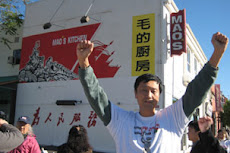
Protest at Mao's Kitchen 抗议道德腐败的“毛的厨房”
Click Picture to View Video, Photos and Article about "Mao's Kitchen" Protest 点击照片观看抗议“毛的厨房”的视频,照片与文章
Kai Chen Protests "Confucius Classroom" 陈凯抗议“孔学堂”
Click Photo to Review All Related Articles/Reports about Kai Chen Protesting "Confucius Classroom" in American Schools 点击照片阅读有关陈凯抗议“孔学堂”的文章与报道
Olympic Freedom T-shirt Global Movement 奥运自由衫全球运动
Click T-shirt to Learn about My Olympic Freedom T-shirt Global Movement Video Clips, Photos and Article. 点击自由衫观看视频,照片与文章
“国歌”- 安.兰德 著,陈凯 译 "ANTHEM" by Ayn Rand, Translation by Kai Chen
Click Bookcover to Read "Anthem" in Chinese, Translation by Kai Chen 点击书面阅读安. 兰德“国歌”一书,陈凯翻译
 陈凯博客: www.kaichenblog.blogspot.com
 on Jan 31st, 2011 and filed under Daily Mailer, FrontPage.