Monday, June 2, 2014
A Poem by Bei Ming - I am "Tank Man" 北明 诗 - 我是王维林 (天安门大屠杀二十五年纪念)
A Poem by Bei Ming - I am "Tank Man"
北明 诗 - 我是王维林 (天安门大屠杀二十五年纪念)
《国歌》译者序
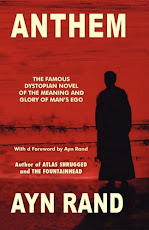
Translator's Forewords - "Anthem" by Ayn Rand
序者:陈凯 Forewords by Kai Chen
2006-04-02 16:55:45
1989年5月的一天,当我在天安门广场上抗议示威的人潮中听着人们用国歌-中华人民共和国的国歌去激励他们争取民主的斗志的时候,我不禁慨然自叹了。
有什么能比这情景更自我嘲弄和自我讽刺的了呢? 在一个没有个体概念的文化环境中,人们拿什么去争取民主呢?用一个压迫个体的整体去代替另一个压迫个体的整体吗?“爱国”,去爱一个压迫个人,压迫自身的国家吗?有人半开玩笑的说出了真情:“毛泽东每次用95%的人去整剩下的5%的人,把中国人整了一遍。”“我是为人民服务的,又不是为你服务的”论调在中国到处可闻。“又不是我一个人”和“我一个人有什么用”成了中国几乎每一个人推卸责任与为所欲为的借口。在天安门惨案后的今天,海内外的中国人和关心中国的所有人们都认识到中国应该变。但用什么去变?变向何处?改革的意义在哪?民主的原则又是什么?是用理性之剑去澄清黄河之水,让它为人造福还是再用混浊的感性之泥去给那已经腐朽不堪的黄河之堤修修补补呢?希特勒的国家社会主义,邓小平的中国式现代化,以及中国与世界历代专制者的共同点在哪里呢?
中国人正在选择与拒绝选择的叉路口上:是要以团体为本位的控制型的政治结构,还是要以个体为本位的参与型的政治结构;是要一种个人通过对团体的专权向他人索取的文化心态,还是要一种个人通过对自身的发掘向人类奉献的文化心态;是个体将控制自身的责任推给外界,还是个体将控制自身的责任收归己有;是个人通过对自身的认识,暴露,分析,判断,与调节去想象,创造,完善自身呢,还是个人通过外界给自身贴的标签去做一个一成不变的机器上的螺丝钉呢;是个人用自己的血肉之躯在他人的眼睛中建立存在,还是个人用自己的自知,理性与逻辑给自身的存在下定义;是先形式后内容,先虚后实,先团体后个人的枪赋政权治人,还是先内容后形式,先个人后团体,先实后虚的天赋人权治政;是去追求一个一成不变的完美社会呢,还是去追求一个有自我调节机制,自我追求完善的,道德的但不完美社会呢;总之,是将个人作为一个被动体在混浊的自然与社会环境中拒绝选择,还是将个人作为一个主动体用知觉的武器在澄清自然与社会环境中做出选择。婊子与牌坊是不能并立的。
中国的专制的、大一统的文化是建筑在个人对“国家”(也就是安.兰德女士在“国歌”一书中提到的“我们”)的崇拜上。要击破中国的“朝代”与“人代”的恶性循环,就要击破这个对“国家”,对“我们”的崇拜。否则,中国将来的“民主”也与中国过去的“人民”一样,不过是专制的又一个时髦的代言词罢了。
安-兰德女士(Ayn Rand)在希特勒,斯大林时代的昨天,五十多年以前,就用“国歌”这部神话般美妙的小说一针见血地阐述了“个人与自我是人类社会进步的源泉”这一哲理。她的故事中的许多情节我想是几乎所有的中国人都有其亲身体验的。安.兰德女士用她那富有想象力的,简洁的语言说出了至今大多数中国人(虽然他们已经饱受其害)还没有认识到的简单而又极深刻的哲理。就是那几个简单的字所包融的含义,那几个字:人,个人,我,自我。
“国歌”一书是我在天安门惨案后,在一次为美国的自由党演讲之后,一位关心中国的美国自由党人爱仑.司达所赠送的。我只在此对他深表感谢。
1989年10月
于洛杉矶
【《国歌》(Anthem)是安-兰德(Ayn Rand)创作的小说,最初发表于1938年,陈凯翻译。】
------------------------------------------------------------
“国歌”- 安.兰德 著,陈凯 译
"ANTHEM" by Ayn Rand (In Chinese) Translation by Kai Chen
请阅读 ”国歌“ 全文
* Links to all the chapters of "Anthem" 国歌:
Author: Ayn Rand 安. 兰德 Translator: Kai Chen 陈凯
http://www.youpai.org/read.php?id=524 ”译者序“
http://www.youpai.org/read.php?id=558 ”作者前言“
http://www.youpai.org/read.php?id=591 ”第一章“
http://www.youpai.org/read.php?id=613 ”第二章“
http://www.youpai.org/read.php?id=661 ”第三章“
http://www.youpai.org/read.php?id=691 ”第四章“
http://www.youpai.org/read.php?id=749 ”第五章“
http://www.youpai.org/read.php?id=787 ”第六章“
http://www.youpai.org/read.php?id=802 ”第七章“
http://www.youpai.org/read.php?id=843 ”第八章“
http://www.youpai.org/read.php?id=878 ”第九章“
http://www.youpai.org/read.php?id=904 ”第十章“
http://www.youpai.org/read.php?id=937 ”第十一章“
http://www.youpai.org/read.php?id=980 ”第十二章“


Tuesday, May 20, 2014
Sir Anthony Hopkins Hears The Waltz He Wrote 50 Years Ago 华尔兹/生命的激情与美好
Sir Anthony Hopkins Hears The Waltz He Wrote 50 Years Ago For The First Time. I’m Left Speechless
一个激情的人首次听到了他五十年前所谱的华尔兹 - 生命的激情与美好。
For the first time in his life, actor Sir Anthony Hopkins hears a waltz piece he wrote 50 years ago called “And The Waltz Goes On”. Played by Dutch violinist Andre Rieu and his Johann Strauss Orchestra, Rieu named one of his albums after the song.
Friday, March 14, 2014
陈凯访谈 - 自由,专制,语言,毛像、、、 Kai Chen Interview on Glazov Gang - Freedom, Despotism, Language, Mao...
Exclusive: Arabs’ Language Oppression Squelches Intellectual Growth

Wednesday, March 12, 2014
中国禁片“天注定” A Movie Banned in China "A Touch of Sin"
Kai Chen's Comment on "A Touch of Sin":
陈凯影评 - “天注定”:
In China, everyone is the writer, director, actor and a member of audience to have produced the gigantic tragic drama we called the Chinese culture. More tragically, most Chinese are trapped emotionally in this never ending tragedy. They rewrite it, reenact it, redirect it, reproduce it and re-appreciate it as a member of the audience. Yet, they have never had any mental capacity to understand the roots of the tragedy. Nor have they had any courage to eradicate the roots of this never ending tragedy.
This movie (A Touch of Sin) should have been entitled "Silent Despair" or "No Way Out" or simply "Chinese Tragedy". Yet many would defend this tragedy with their lives, rather than rid off this tragedy by a fundamental change of their mindset, from Chinese despotic culture/Confucianism to Christianity/Freedom.
----------------------------------------------------
20年后,中国将成为全球最穷国家.
In China, everyone is the writer, director, actor and a member of audience to have produced the gigantic tragic drama we called the Chinese culture. More tragically, most Chinese are trapped emotionally in this never ending tragedy. They rewrite it, reenact it, redirect it, reproduce it and re-appreciate it as a member of the audience. Yet, they have never had any mental capacity to understand the roots of the tragedy. Nor have they had any courage to eradicate the roots of this never ending tragedy.
This movie (A Touch of Sin) should have been entitled "Silent Despair" or "No Way Out" or simply "Chinese Tragedy". Yet many would defend this tragedy with their lives, rather than rid off this tragedy by a fundamental change of their mindset, from Chinese despotic culture/Confucianism to Christianity/Freedom.
----------------------------------------------------
20年后,中国将成为全球最穷国家.
1、从申请移民的情况看,中国90%的高官家属和80%的富豪已申请移民,或有移民意愿。一个国家的统治阶层和既得利益阶层为什么对自己的国家失去信心?很令人费解!
2、中国人不了解他们应该对国家和社会所承担的责任和义务…。
3、中国人是世界上少数没有信仰的可怕国家之一。全民上上下下唯一的崇拜就是权力和金钱,自私自利。
4、人民大众过去是权力的奴隶,演变为金钱的奴隶。这样的国家如何赢得尊重和信任?
5、大多数中国人从来就没有学到过什么是体面和尊敬的生活意义,唯有获取权力或金钱就是生活的一切,就是成功。全民腐败、堕落、茫然的现象,在人类历史上空前绝后!
6、肆无忌惮地对环境的破坏、对资源的掠夺,几近疯狂。这样奢靡、浪费的生活方式,需要几个地球才能供给?
美国驻华大使骆家辉对中国人的评价:
1.非常聪明,但非常相信传言;
2.凡事喜欢抢,从出生抢床位,到临终抢坟地,从头抢到尾;
3.在大事上能忍气吞声,但在小事上却斤斤计较;
4.能通过关系办成的事,绝不通过正当途径解决;
5.计较的不是不公平,而是自己不是受益者;
6.动辄批判外界,却很少反思自己;
7.自己爽不爽没关系,反正不能让别人爽;
8.不为朋友的成功欢呼,却愿为陌生人的悲惨捐助;
9.不为强者的坚持伸手,愿为弱者的妥协流泪;
10.不愿为执行规则所累,宁愿为适应潜规则受罪;
11.不为大家的利益奋斗,愿为大家的不幸怒骂;
12.不为长远未来谋福,愿为眼前小利冒险。
Wednesday, February 26, 2014
After a Democrat Praises Cuba, Marco Rubio Blasts Communism 真实的古巴和委内瑞拉/社会主义/共产主义 - 真实的邪恶
Kyle Becker | On 25, Feb 2014
After Democratic Senator Tom Harkin praised Cuba on several issues, Senator Marco Rubio gave what has been called by Miami Herald reporter Marc Caputo as the “best oration of his career.” Its passion and candor about the despicable socialist regimes of Cuba and Venezuela should put those politicians who can actually praise the oppressive nations to shame. The best lines from Rubio’s stemwinder, which is worth every minute:
- Let me tell you what the Cubans are really good at, because they don’t know how to run their economy, they don’t know how to build, they don’t know how to govern a people. What they are really good at is repression.
- He cited a poll, ‘More Americans want normal relations with Cuba.’ So do I — a democratic and free Cuba. But you want us to reach out and develop friendly relationships with a serial violator of human rights, who supports what’s going on in Venezuela and every other atrocity on the planet? On issue after issue, they are always on the side of the tyrants. Look it up. And this is who we should be opening up to? Why don’t they change? Why doesn’t the Cuban government change? Why doesn’t the Venezuelan government change?
- But here’s the great news. I don’t know if they get C-SPAN in Cuba. I bet you the government people do. I hope you see that in America, we’re a free society. You’re allowed to come on the floor and you’re allowed to say and spread whatever you want. You think Cuba’s a paradise? You think it’s an example and a model that we should be following? You’re free to say that, here, in the press and anywhere you want. But we’re also free to come here and tell the truth. We’re also free to come here and denounce the violations of human rights and brutality.
That’s just a sample of this awesome speech that hopefully will change the game and encourage more politicians to come out openly against the global scourge of socialism.
Sunday, February 23, 2014
Friday, January 17, 2014
新书介绍:乒乓外交 Kai Chen's Book Review on "Ping Pong Diplomacy" by Nick Griffin
新书介绍:乒乓外交
Kai Chen's Book Review on "Ping Pong Diplomacy" by Nick Griffin
"Ping Pong Diplomacy" Amazon book link:
http://www.amazon.com/Ping-Pong-Diplomacy-Secret-History-Changed/dp/1451642776/ref=sr_1_1?ie=UTF8&qid=1389817824&sr=8-1&keywords=ping+pong+diplomacy
Youtube Link: http://www.youtube.com/watch?v=r5MkFSC2Xfk
"One in a Billion" Amazon book link:
http://www.amazon.com/One-In-Billion-Journey-Freedom/dp/1425985025/ref=sr_1_1?ie=UTF8&qid=1389965738&sr=8-1&keywords=One+in+a+billion%2C+Kai+chen
Kai Chen's Email to Nick Griffin
Dear Nick: 4/15/14
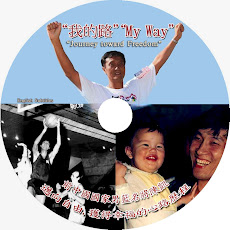
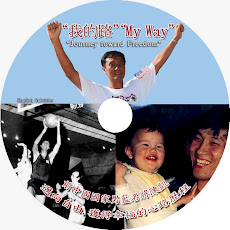
I just finished reading your book "Ping Pong Diplomacy". It took me back decades to those brutal, struggling and unforgettable years. I am glad that my experience as a former pro-athlete in China, my book "One in a Billion - Journey toward Freedom" and "My Way" (the Youtube program of NTDTV, by Fiona Zhao, the producer) all contributed to your accurate recount of the important historical moments and events in China and in the world at the time. I am truly grateful to you for returning history to its original form, not by political propaganda, but by a person's conscience and drive to seek truth. I thank you.
Your book is a fascinating read, since I have experienced all "sports as political tool" in China. Still many facts astonished me:
I now realized when I was forced back to Beijing from Guangzhou Military
District in 1971, I was indeed with the Ping Pong team players on the same plane from the World Championships in Japan. I now
remember Xi Enting, Liang Geliang and some women players with me on the same
plane. They were signing autographs for some fans. The tourists looked like they were either from
Japanese or Hong Kong. When you interviewed me over the phone, I
couldn't remember the players' names. NSAC General Secretary Song Zhong invited me to
the Oriental Hotel to persuade me back to Beijing, after I escaped from Beijing. The talk lasted more than
one hour. I wonder why he spent so much time with me. Did I have any choice?
As I read through the book, I learned that Zhuang Zedong died in 2013. Though I didn't have personal relationship with him, I pitied him for his life choices. When he was the head of NSAC, he came to talk with us once. The August 1st Basketball team was at a pre-game banquet in a Beijing hotel. I forgot against which third world team we would play (either North Korea or Egypt) the next day. Zhuang came to reiterate the official political line to us - Friendship First, meaning we could not win by too many points. I could still see him in a very awkward manner when he talked as we towered above him. The last time I heard about him was a few years ago, when he took his Japanese wife touring Shenzhen where an old friend of mine who became a sports bureaucrat in Shenzhen met him. The friend also spoke of him with a deep pity. Zhuang indeed was a tragic figure in a political and morally perverse episode in Chinese history. He was abused by many and an abuser to many. In the end, he had no idea what truly happened to him. When I wrote my book/my memoir (One in a Billion - Journey toward Freedom), I indeed was motivated to recount that part of history in some memorable and accurate fashion. I realized if I didn't recount that part of history, the truth would be lost for no one had the courage and mindset to do so. Most Chinese refuse to write memoirs even today due to their mindset, for reasons of fear of offending someone and the authority, therefore suffering the consequences. Thus many episodes in the Chinese history, especially in China's sports history, are either missing or distorted by official/governmental propaganda. True history is written and recorded by conscientious individuals like you and me, not by collectives and the authority by government. I am satisfied that you wrote this book with your conscience and the best of your ability as a writer.
Keep in touch and please accept my sincere gratefulness. Kai Chen
--------------------------------------------------------------------------------------------
Dear Kai Chen
Forgive my late reply. My publisher has been mailing me around the East
Coast and now over to England. I don't like writing longer emails on my
telephone so I was waiting until I was plugged back in to a proper computer.
I really just wanted to thank you once again. Although I had spoken to
many of the table tennis players before I first contacted you, our conversation
was the first time I could feel the full effect of what those years must truly
have been like. You paint the full portrait while I had been trying to piece
together a puzzle. There are so many memoirs waiting to be written in China. I
really hope that one day the story of Chinese table tennis is told from an
insider's point of view, from someone who witnessed all the extraordinary ups
and downs of the 1960s and 1970s. I think it would be well read in China,
All best to you and to Fiona Zhao for doing such wonderful work in 'My
Way',
Best
Nicholas
Monday, December 30, 2013
刘宗正对中文病态一思 Hugo Liu on Defects of Chinese Language
陈凯 按:刘宗正先生曾专修中文。 他对中文的病态与危害有自己独特的见解。 我在此转载他的访谈视频。
Kai Chen's Words: Hugo Liu is a friend of mine and an expert in the origin of Chinese language. He has a unique view point on the defects and poisonous effect of the Chinese language on human perception of reality and truth. Hereby I re-post his interview by Samuel Lee on this issue.
-----------------------------------------------------------------------
From Fiona Zhao:
赵枫一语:
1/3/14 On Facebook
长期生活在中国文化中的人,对痛苦相当认同。认为痛苦、不幸,无奈是人生的常态,而幸福、快乐是非常态。所以才会有“人生不如意之事,十之八九”,“人生无常”的各种说法。当人认同了痛苦之后,你就会发现人们做出的选择都是反对自己幸福的;同时,人们会用用这些选择带来的不幸、无奈来证实自己人生悲观无奈的看法是正确的。由此形成了完全负向的人生观,人虽活着,却缺少活力,人虽喘气,却没有生命的气息。
其实,人是可以自由的,人是可以幸福的是一种“信仰”,而这种信仰是来源与人与“神”的关系,也就是基督文明。认为人生是充满了喜乐的,生命值得庆贺的。而中国的“神”都是让人离开生活,遁世的,认为人之成为人,是一件令人沮丧的事情。这两种对生命,对人生的态度是完全反向的。这是一个非常深刻的议题,我思考了很久。认为我不属于一个反对我的存在以及反对生命存在的文化。最终决定彻底离开中国文化,走入基督文明,拥抱自己生命的意义。为此,付出了沉重的代价。但是,当我进入到自由中,体味到生活的甘甜,生命的激情时,我认为这一切是非常值得。Freedom is not free. 我的根从来就不在中国,我的根在自由里。不要来生不做中国人,这一刻起,就可以不做中国人。
Wednesday, December 25, 2013
美國黑人牧師對自己種族的看法 A Courageous Pastor Tells the Truth
陈凯一语 Kai Chen's Words:
Indeed, "Only truth shall set you free".
的确,“只有对真实的不懈追求才能使你真正得到自由”。
Truth is often uncomfortable, even painful. But truth is always liberating.
It is always hard to face the truth. But the pastor has a great courage to face the truth and tell it like it is. The Chinese should face the truth that their own culture and language are big liabilities for them to achieve freedom.
Only a great Christian can face the truth, pursue the truth with courage and follow the truth with conviction. I am very moved by the pastor's fiery but truthful statement. I only wish there were someone like him in the Chinese community.
Friday, December 13, 2013
章家敦访谈/中国面临崩溃 Gordon Chang "China on the Edge"
章家敦访谈/中国面临崩溃
Gordon Chang "China on the Edge"
http://freebeacon.com/chinese-naval-vessel-tries-to-force-u-s-warship-to-stop-in-international-waters/
China's warship challenges US Navy.
From Kai Chen:
I attended Gordon Chang's speech on China last night. I concur with his point that China is indeed on edge of lashing out/collapse. Something big is happening both in the Chinese regime's power circle and in the Chinese military. The recent aggressive behavior on the part of Chinese military signals a desperate and very shaky political situation in China.
China has never been a nation state. China has always been a despotic dynasty. Today's China is a "communist party dynasty". It does not respect borders. Its territories expands and contracts according to the power strength from the central government. It views surrounding countries not as neighbors, but as subjects of the emperors. Its military owns loyalty not to the state, but to particular persons in the power structure. With the communist party dynasty's last gasps to survive, most likely it will lash out at the neighboring countries and the US, as the signs manifested recently.
China's economy is faltering with only 1-2 % real growth rate (the regime brags about 7-8%). The banks are in the mode of defaulting. The regional governments in the provinces are splitting. The Xi's position in the recent trasition is very shaky to say the least. The military's hard-liners such as General Liu Yazhou is ascending via threatening rhetoric toward the US and Japan and the neighboring countries. With Obama's appeasement policies in the world toward tyrannies, we are approching the situation before WWII. Brace yourself for a perfect storm.
Reference:
Gordon Guthrie Chang (Chinese: 章家敦; pinyin: Zhāng Jiādūn) is a lawyer, author, and television pundit, best known for his book The Coming Collapse of China (2001), in which he argued that the hidden non-performing loans of the "Big Four" Chinese State banks would likely bring down China's financial system and its communist government and China would collapse in 2006. In Nuclear Showdown: North Korea Takes On the World (2006), Chang suggests that North Korea is most likely to target Japan, not South Korea. Chang suggests that North Korean nuclear ambitions could be forestalled if there was concerted multi-national diplomacy, with some "limits to patience" backed up by threat of an all-out Korean war.
Gordon Chang continues to maintain that China is on the brink of collapse and that the people are one step away from revolution.[2] He also argues that China is a "new dot-com bubble", adding that the rapid growth by China is not supported by various internal factors such as decrease in population growth as well as slowing retail sales.[3] In a separate interview, he remarked that China achieved its 149.2% of its current trade surplus with the United States through "lying, cheating and stealing" and that if China decided to realize its threat that had been expressed since August 2007 to sell its US Treasurys, it would actually hurt its own economy which is reliant on exports to the United States; the economy of the United States would be hurt by a sell off of Treasurys, causing the United States to buy less from China, which would in turn hurt the Chinese economy.
-----------------------------------------------------------------------
http://pjmedia.com/blog/assassination-rumors-in-china/
by GORDON G. CHANG
December 10, 2013 - 11:03 pm
For about a week, assassination rumors have been swirling around the Chinese capital. According to reports carried in Hong Kong outlets such as Mingjing News, Zhou Yongkang has been detained for involvement in a plot to kill Xi Jinping, the newish ruler of China. Since then, various sites, especially the U.S.-based Boxun News, have carried articles relaying murderous activities attributed to Zhou, who was the country’s internal security czar until November 2012.
Zhou, 71, has also been accused of using two members of the People’s Armed Police — once under his command — to kill his ex-wife. His two drivers reportedly confessed to their role in the murder and were given terms of 15 to 20 years in prison. According to news articles, they were released after serving just three and four years and given jobs in the state-run petroleum industry, which at the time was controlled by Zhou and his political allies.
These various reports, widely circulated, remain unconfirmed, although it is clear the once mighty Zhou is in political trouble of some sort. In November, state media reported that he offered condolences to the family of an educator, an indication that he was still in good standing in the Party. Nonetheless, it is curious that Zhou has dropped out of view. He was last seen in public on October 1, at the National Day celebrations of the China University of Petroleum.
Moreover, his son, Zhou Bin, is reported to be under a form of house arrest in Beijing and cooperating with authorities. A number of Zhou Yongkang’s associates in the petroleum industry — most notably Jiang Jiemin — have been detained. Also under investigation, according to one source, are Zhou’s secretary, bodyguards, and drivers.
The rumors of last week, although highly sensational, provide a context for events in the past few months that at the time had seemed out-of-place. In August, Hong Kong’s South China Morning Post reported that Zhou was under investigation for corruption.
Then, the move against Zhou seemed to be an unprecedented violation of the Communist Party’s unwritten rule that no member of the Politburo Standing Committee can be held accountable (Zhou left the Standing Committee, the apex of Chinese political power, in November 2012). The prosecution, however, becomes more understandable if he in fact plotted to kill Xi Jinping.
It should also be noted that the rumors about Zhou’s coup attempt give credence to the stories that in March of 2012 there was gunfire inside Zhongnanhai, the Communist Party leadership compound in Beijing, and in the surrounding streets, where there were also armored car movements. And the unconfirmed stories add to the speculation that Bo Xilai, once China’s more openly ambitious politician, was trying to either raise a private army or encourage elements of the People’s Liberation Army to support him in subversive endeavors of some sort. Bo and Zhou are believed to have been, if not co-conspirators, then extremely close allies.
Subscribe to:
Posts (Atom)