Those who want to sacrifice liberty for a little security deserve neither liberty, nor security. Awaken Your Dormant Conscience! Give me liberty or give me death! Winning your inner struggle as a "Free Being" against your nihilistic identity of "being Chinese".
那些想用放弃自由去得到安全感的人们既不值得自由也不会得到安全感。 唤醒你沉睡的良知!不自由,毋宁死!开始并赢得一场你内心的“自由人”搏击你外在的“中国人”的文化反思反省浪潮。 “自由人”必胜! “中国人”必败!
Contact Kai Chen 联络陈凯--电邮信箱 Email:elecshadow@aol.com 电话 Phone: 661-367-7556
The Chinese Party/Slave-state invests millions to establish "Confucius Institutes" and many "Chinese language programs" around the world. Its aim is to corrupt, infiltrate, brainwash and spy on the free world. Top of their goal is to corrupt American political culture, making communism/socialism/Fascism acceptable to the population. The young and the impressionable are their primary target. I hope American authorities and American people will wake up to this insidious scheme and take proper measures to counter this evil act. --- Kai Chen
Beijing Chinese Language Schools Brainwash Students Overseas 洗脑学院
By Yuan Mei, Liu Fei & Robin Kemker
Epoch Times Staff Created: Jul 7, 2009 Last Updated: Jul 10,
LOS ANGELES—Recently Beijing established manyChinese “Confucius Institutes” around the world through cooperation with Asia-Pacific research institutes or Chinese language centers in universities overseas. However, this move is criticized for exporting communist ideology in the name of language education.
In the United States, there are about 40 such Confucius Institutes. Their students also include government officials and consultants who advise decision makers.
Patriotism for the Communist Party and China
China’s state media people.com.cn reported the curriculums and teaching materials of the Institutes come from the Confucius Institute Headquarters located in Beijing. The Institutes follow a standardized instruction, testing, and training system.
The teaching materials are widely adopted by local Chinese schools overseas. Yao Zhe, a Chinese school teacher in southern California, confirmed this. Yao said, “Through the teaching material, Beijing propagates its ideology of patriotism for the Communist Party and China, autocratic culture, and nationalism. Almost all Chinese schools in the United States that teach simplified Chinese adopt materials from the Institute.” Yao called it a ‘soft cold war,’ ‘a battlefield without a smoking gun’ because they brainwash people without them knowing it.
'Report Teachers That Are Undercover Agents'
Yao at one time applied to be a journalist in the United States. She later became a Chinese language teacher because she saw how Beijing had infiltrated overseas media. She realized such infiltration could be seen everywhere in the United States.
Beijing also aggressively develops colonies of its ideology and imperceptibly brainwashes overseas Chinese. When there is an incident, these Chinese people will take the same stand as Beijing and view overseas Chinese dissidents with hatred. They become Beijing’s voice in other countries.
Insider information from China’s Linguistic Committee indicates that one of Hu Jintao’s think tanks suggested to him that although China was invaded many times during its history, Chinese culture was never compromised. This proves its strength, so they suggested the establishment of Confucius Institutes, and in the name of teaching Chinese language, teach Communist ideology instead of Confucianism’s principles.
'I Am Chinese, Not an American'
Chinese journalist Li Gong noted in a 2007 interview that he saw a Chinese language public school teacher in the United States teaching students to say in Chinese, “I am Chinese, not an American.” “How can American children learn to love their country when they are taught this way? It terrifies me,” Li said. “Cultural infiltration using language is against the principles of Startalk.”
Startalk is a program of the National Security Language Initiative established by former President Bush in January of 2006. The initiative seeks to expand and improve the teaching and learning of strategically important world languages that are not now widely taught in the United States. It started with Arabic and then added Chinese.
Li by chance, met a Language Section Chief of the Department of Homeland Security who requested anonymity, since he was not authorized to speak on behalf of the department. Li asked why both languages (Arab and Chinese) are listed as homeland security strategy languages? The section chief answered Arab is for preventing terrorism, but only smiled when asked why Chinese was on the list.
When Li asked the section chief about the infiltration of agents into the schools, the section chief replied that two years ago, the CIA had asked the public to report any Chinese teachers who act like spies in Los Angeles.
Covert Brainwashing
It should be noted that the Communist Party’s propaganda website states that overseas language schools are one of the “three pillars” of the party’s international propaganda effort.
Parents are not aware that subtle methods of brainwashing are occurring in the textbooks and research assignments.
According to a Chinese language teacher affiliated with a Confucius Institute in the United States, who wishes to remain anonymous, parents and educators are not aware of the subtle methods of brainwashing occurring in the textbooks and assignments. These assignments include research into the lives of communist leaders, merits of communism, etc. Additionally, research assignments require students to use party English language websites hosted in China, the contents of which are generally not reviewed by the U.S. school system.
The HanBan, sponsor of the Confucius Institutes has various levels of textbooks for teaching Chinese courses. This Chinese language teacher provided the scanned upper half of page 93 in Volume 3 of Contemporary Chinese by Dangdai Zhongwen, volume 3, in use in 2008 in the United States, the English translation of a Chinese section states:
Going to see Ma Kesi means going to see God
The teacher posed the question, "Why do they discuss god? Why isn’t Ma Kesi literally translated? Ma Kesi is the god of communism. They don’t want the students to know the name.”
During the horrific Cultural Revolution, Mao Zedong exhorted members of the Communist Party and its organizations that do its bidding to the death, “They will be greeted by Karl Marx.” Karl Marx in Simplified Chinese is pronounced Ma Kesi, the god of communism.
The teacher said that some may consider such matters trite. One must consider what else is hidden in these institute teaching materials and especially the research assignments in its curriculum.
'... Because we don’t have communism in America'
One reason for this teacher’s willingness to give an interview was an unexpected meeting with a former student taught several years before. When asked what university the student was going to attend, the student replied, …
“I don’t want to attend any universities in America, or even in Tokyo. I want to go to a university in Beijing, because they teach communism there. I don’t understand why we don’t have communism in America.”
This teacher ended, “They have no idea about the truth, they don’t know the true history of the party!”
As a reporter and writer, I have shared this student’s statement with several seasoned educators and administrators through various channels. One senior administrator in Montana was skeptical; he could not believe that this had taken place. He thought I was misrepresenting the situation. Montana had already agreed to an institute. He knows the history of the communism, but the students don't.
My grandfather once sheepishly shared with me that he was a communist in the Netherlands through the carpenters’ guild. After World War I, economic times were hard in Europe and many of the commoners in Europe were enamored with the communist promise of “Heaven on Earth.”
However, the Communist Revolution quickly opened their eyes. What happened in Russia caused the Dutch to renounce any affiliation with—quoting my grandfather—“The blood thirsty party.”
As our economy slows and more families are affected, the promise of “Heaven on Earth” could deeply affect how communism is viewed by our young people.
The Confucius Institutes, the third pillar of the Chinese Communist Party’s propaganda machine will not be covering the finer points of the Great Famine and the Cultural Revolution, let alone the systematic genocide of Falun Gong practitioners and other targeted groups taking place in China today.
Good and evil can never coexist with each other. If the Americans and the free world are still confused about this fundamental truth, the Chinese party/slave-state has never been confused about its intention to destroy freedom in the world. It is much like what is happening in the current anti-terrorist effort - Obama administration has never been willing to call it a war. But the Jihadists in the world have always taken it as a war against freedom and the West/America. --- Kai Chen
China PLA officer urges challenging U.S. dominance 中军方: 不战争就等死
3/1/2010
Credit: Reuters/Stringer
BEIJING (Reuters) - China should build the world's strongest military and move swiftly to topple the United States as the global "champion," a senior Chinese PLA officer says in a new book reflecting swelling nationalist ambitions.
The call for China to abandon modesty about its global goals and "sprint to become world number one" comes from a People's Liberation Army (PLA) Senior Colonel, Liu Mingfu, who warns that his nation's ascent will alarm Washington, risking war despite Beijing's hopes for a "peaceful rise."
"China's big goal in the 21st century is to become world number one, the top power," Liu writes in his newly published Chinese-language book, "The China Dream."
"If China in the 21st century cannot become world number one, cannot become the top power, then inevitably it will become a straggler that is cast aside," writes Liu, a professor at the elite National Defense University, which trains rising officers.
His 303-page book stands out for its boldness even in a recent chorus of strident Chinese voices demanding a hard shove back against Washington over trade, Tibet, human rights, and arms sales to Taiwan, the self-ruled island Beijing claims as its own.
"As long as China seeks to rise to become world number one ... then even if China is even more capitalist than the U.S., the U.S. will still be determined to contain it," writes Liu.
Rivalry between the two powers is a "competition to be the leading country, a conflict over who rises and falls to dominate the world," says Liu. "To save itself, to save the world, China must prepare to become the (world's) helmsman."
"The China Dream" does not represent government policy, which has been far less strident about the nation's goals.
Liu's book testifies to the homegrown pressures on China's Communist Party leadership to show the country's fast economic growth is translating into greater sway against the West, still mired in an economic slowdown.
The next marker of how China's leaders are handling these swelling expectations may come later this week, when the government is likely to announce its defense budget for 2010, after a 14.9 percent rise last year on the one in 2008.
"This book represents my personal views, but I think it also reflects a tide of thought," Liu told Reuters in an interview. "We need a military rise as well as an economic rise."
Another PLA officer has said this year's defense budget should send a defiant signal to Washington after the Obama administration went ahead in January with long-known plans to sell $6.4 billion worth of arms to Taiwan.
"I think one part of 'public opinion' that the leadership pays attention to is elite opinion, and that includes the PLA," said Alan Romberg, an expert on China and Taiwan at the Henry L. Stimson Center, an institute in Washington D.C.
"I think the authorities are seeking to keep control of the reaction, even as they need to take (it) into account," Romberg said in an emailed response to questions.
Liu argues that China should use its growing revenues to become the world's biggest military power, so strong the United States "would not dare and would not be able to intervene in military conflict in the Taiwan Strait."
"If China's goal for military strength is not to pass the United States and Russia, then China is locking itself into being a third-rate military power," he writes. "Turn some money bags into bullet holders."
China's leaders do not want to jeopardize ties with the United States, a key trade partner and still by far the world's biggest economy and military power.
Yet Chinese public ire, echoed on the Internet, means policy-makers have to tread more carefully when handling rival domestic and foreign demands, said Jin Canrong, a professor of international relations at Renmin University in Beijing.
"Chinese society is changing, and you see that in all the domestic views now on what China should do about the United States," said Jin. "If society demands a stronger stance, ignoring that can bring a certain cost."
Liu's book was officially published in January, but is only now being sold in Beijing bookstores.
LIGHTING A FIRE IN AMERICA'S BACKYARD
In recent months, strains have widened between Beijing and Washington over trade, Internet controls, climate change, U.S. arms sales to Taiwan and President Barack Obama's meeting with Tibet's exiled leader, the Dalai Lama, who China reviles.
China has so far responded with angry words and a threat to sanction U.S. companies involved in the Taiwan arms sales. But it has not acted on that threat and has allowed a U.S. aircraft carrier to visit Hong Kong.
Over the weekend, Chinese Premier Wen Jiabao said he wanted trade friction with the United States to ease. U.S. Deputy Secretary of State James Steinberg is due to visit Beijing this week.
Liu and other PLA officers, however, say they see little chance of avoiding deepening rivalry with the United States, whether peaceful or warlike.
"I'm very pessimistic about the future," writes another PLA officer, Colonel Dai Xu, in another recently published book that claims China is largely surrounded by hostile or wary countries beholden to the United States.
"I believe that China cannot escape the calamity of war, and this calamity may come in the not-too-distant future, at most in 10 to 20 years," writes Dai.
"If the United States can light a fire in China's backyard, we can also light a fire in their backyard," warns Dai.
Liu said he hoped China and the United States could manage their rivalry through peaceful competition.
"In his State of the Union speech, Obama said the United States would never accept coming second-place, but if he reads my book he'll know China does not want to always be a runner-up," said Liu in the interview.
(Editing by Benjamin Kang Lim and Jeremy Laurence)
地点 Address: West High School - 20401 Victor Street, Torrance, CA 90503
12:25-12:27 - Chie introduces Kai Chen 12:27-12:45 - Mr. Chen speaks about his life story and the importance of human rights 12:45 - answer questions. 12:50pm game of Pig (Just like Horse, but shorter. If you make a basket, your opponent has to make it, too, or else he/she gets a letter)
Book Sale: (One in a Billion) $25 for adults, $20 for students. Those who buy the book will get a free copy of Kai Chen's special DVD "My Way - Journey toward Freedom".
Directions: West High School - 20401 Victor Street, Torrance, CA 90503
Take 405 South Exit Hawthorne Blvd. and turn right Drive for about 6 minutes Turn Right on Del Amo Blvd. Turn Left on Victor St. Park in the lot and walk inside the administration building and ask Ruth to call for Mr. Roman
Contact Albert Roman for information: 310-918-4700
Please try to arrive before 12pm. There could be traffic.
This is a very interesting and revealing article. The increasing awareness of illegitimacy of the communist regime by the Chinese intellectuals and officials will spell the doom of this criminal enterprise founded by murder and mayhem. --- Kai Chen
China fracturing under party's iron grip 中共党奴朝频临崩溃
John Garnaut February 27, 2010 - 3:00AM
China's top expert on social unrest has warned that hardline security policies are taking the country to the brink of "revolutionary turmoil".
In contrast with the powerful, assertive and united China that is being projected to the outside world, Professor Yu Jianrong says his prediction of looming internal disaster reflects on-the-ground surveys and also the views of minister-level Chinese leaders.
He said deepening social fractures are caused by the Communist Party's obsession with preserving its own monopoly on power through "state violence" and "ideology", rather than justice.
Disaster could be averted only if "interest groups" - which he did not identify - were capable of making a rational compromise to subordinate themselves to the Chinese constitution, he said.
Some lawyers, economists and religious and civil society leaders have recently expressed similar views, but it is unusual for someone with Professor Yu's official standing to make such direct and detailed criticisms of core Communist Party policies.
Professor Yu is known as an outspoken insider, who advises top leaders and conducts surveys on social unrest as director of social issues research at the Institute of Rural Affairs at the Chinese Academy of Social Sciences.
He has previously warned of the increasing costs of imposing ''rigid stability'' by force but has not previously been reported as speaking about such immediate dangers.
''Some in the so-called democracy movement regard Yu as an agent for the party, because he advises senior leaders on how to maintain their control," said Feng Chongyi, associate professor in China studies at the University of Technology, Sydney.
''I believe Yu is an independent scholar. This speech is very significant because it is the first time Yu has directly confronted the Hu-Wen leadership and said their policies have failed and will not work.''
Pointedly, Professor Yu took aim at the policy substance behind two of President Hu Jintao's trademark phrases: "bu zheteng" (stability, or ''don't rock the boat'') and "harmonious society".
Professor Yu's speech was delivered on December 26, the day after China's leadership shocked liberal intellectuals and international observers by sentencing rights activist Liu Xiaobo to 11 years' jail for helping to draft a manifesto for constitutional and democratic government in China, called Charter 08.
The verdict followed a tumultuous year when the party tightened controls over almost all spheres of China's burgeoning civil society, including the internet, media, legal profession, non-government organisations and business.
Professor Yu's speech has not previously been reported but the text and audio recording of it has recently emerged on Chinese websites.
Professor Yu cited statistics showing the number of recorded incidents of "mass unrest" grew from 8709 in 1993 to more than 90,000 in each of the past three years.
"Most importantly, the number of large-scale mass riots is growing," he said.
"More and more evidence shows that the situation is getting more and more tense, more and more serious.''
He said land disputes had replaced rural tax disputes as the most common source of unrest, while also citing a growing range and severity of urban worker disputes.
Mafia groups were increasingly involved in state-sponsored thuggery, he said, while disgruntled peasants were directing blame at provincial and even central level government.
"For seeking 'bu zheteng' we sacrifice reform and people's rights endowed by law … such stability will definitely bring great social disaster," he said.
"All stability aims for only one goal: the monopoly of power. We often say it's more open now, but that's thanks to science not government." Professor Yu's speech reflects deep disillusionment among China's liberal thinkers, who had hoped President Hu and Premier Wen Jiabao would implement political reforms.
Dr Feng, who is influential in China's liberal intellectual circles, said he still hoped the Hu-Wen administration would ''do something'' to leave more than a "dark stain" on China's political development before stepping down in 2012.
He said ''the conservative forces are currently very strong" and the country's security tightening and potential future loosening were linked to a leadership succession struggle between President Hu and his Vice-Premier, Li Keqiang, on one hand, and former president Jiang Zemin and current Vice-President Xi Jinping on the other.
''I haven't given up the hope that the Hu/Li camp may make some positive political changes to mobilise public support," said Dr Feng.
The current edition of the Southern Weekend newspaper broke a two-decade taboo by publishing a photograph of a youthful President Hu with his early mentor, former party chief Hu Yaobang, who was purged for his radical liberal and reformist leanings.
Chinese internet search results for the names of both leaders were yesterday blocked for "non-compliance with relevant laws".
A Beijing political watcher echoed Professor Yu's warnings and added that the crackdowns in information freedom were being led by officials who have the most to hide, which did not include President Hu or his closest allies.
"Corrupt officials have such a high and urgent interest in controlling the media and especially the internet," he said. "The more they feel that their days are numbered due to the internet and free information, the more ferocious and corrupt they become, in a really vicious circle leading to final collapse.''
The "World Journal" article below refers the local Americans as the "Whites". Such a racist comment shows you how the Chinese, with their despotic tradition, deliberately separate themselves from the mainstream American society. "Government as the ultimate arbiter - parental government" is the essence of Confucianism. Along with other despotic/tyrannical teachings, Confucianism is indeed a tributary source for modern communism. They all aim at using the collective to destroy individual freedom. I am very glad that Americans start to wake up and see the truth, start take actions to protect freedom in America. --- Kai Chen
-----------------------------------------------
Parents to voice opposition to Hacienda La Puente School District's Confucius Classroom
By Maritza Velazquez, Staff Writer Posted: 02/25/2010 02:22:37 PM PST
Parents and community members who are upset by a Chinese language and culture classroom slated to open at Cedarlane Middle School next year say they're planning to voice concerns at Thursday night's Hacienda La Puente Unified School District board meeting.
They allege that the Confucius Classroom, which is sponsored by the Chinese Language Council International, will become a vessel for political propaganda.
"We are going to war on communism," said Teresa Macias, a Hacienda Heights resident whose two children graduated from Los Altos High School.
Macias said she plans to present the board with photos that tie the Chinese Language Council International, also known as Hanban, with the Chinese Communist Party.
"American people are going to be outraged when they learn the truth," Macias said. " ... We won't tolerate it. We have got to stand up and fight for our American soil."
On Jan. 28, the district's school board voted 4-1 to approve an agreement implementing the Confucius Classroom at Cedarlane Middle School.
According to the agreement, Hanban will provide instructors, books, multimedia materials and money for the program. It states that the goal of the program is to "strengthen educational cooperation between China and the Unified States," as well as facilitate mutual understanding between the youth of the United States and China and promote Chinese language education.
School board members have said that they welcome the public to tour the Confucius Classroom by appointment next year.
"We will be as transparent as possible about the curriculum and what's happening in the classroom," Superintendent Barbara Nakaoka has said.
The board meeting will take place at 7:30 p.m. Thursday at the Hacienda La Puente Unified School District office, 15959 E. Gale Ave. in Industry.
"It is hardly too strong to say that the Constitution was made to guard the people against the dangers of good intentions. There are men in all ages who mean to govern well, but they mean to govern. They promise to be good masters, but they mean to be masters." --- Daniel Webster
对照美国的文化价值观(个体价值与基督精神),一个人不难看到自由与专制冲突的焦点。 在美国人的对美国精神的誓言中有这样的词句:“One nation, under God, indivisible, with liberty and justice for all.”(“一个在上苍之下的、不可分割的国度,将把自由与正义带给所有的人们。”)专制与自由的国度区别在于:专制的国度是政府等于上苍或政府高于上苍,而自由的国度是政府在上苍之下的国度。 在美国所有的钞票上有一句铭言:“In God We Trust”(“我们只相信上苍/神”)。 在一个正常、自由的国度中,人们绝不会认为自由与真实的价值来自任何政府(即使政府有权印钞票),也因此绝不会将希望寄托在任何政府身上。 也正因如此美国的宪法将政府看成是对人(个体)的自由的最大威胁。 所有美国宪法的条款与修正案都是针对、基于保障人的自由与限制政府权力的。 基于“上苍/神赋人权”与“所有人被(上苍/神)创而平等”的自然法则,美国建立了三权鼎立,相互制衡的联邦宪政制度,旨在将“公”限制在“私”之下,将“群体、民众、多数”限制在“个体人的权利“之下,将“政府作救星”的基人的“原弊与软弱”产生的病态崇权崇救星的冲动限制在人的灵魂、道德与理性之下。 “言论自由、结社自由、新闻出版自由”起到了监控政府的作用。 “选举与任期”使个体有了主动的限制政府的决定权。 “分权制约”则将政府“自限”在相互争、辩、夺的平衡控权中。
I don't trust professional politicians who earn their living and make a career by pleasing others. In my opinion, a "smart politician" is exactly what we should avoid no matter how much schooling he/she receives. What we need is "principled and honest" statesmen. It is too bad nowadays in Washington we have too many "smart little men" and too few "principled and honest" good men such as Washington and Reagan. With these little men we have elected in charge, we spend way too much time and energy to monitor, control and oppose them (though this is necessary and a must). Instead, we should have spent most of our time and energy creating wealth, enjoying life for ourselves and our offspring, and exploring into the unknown. --- Kai Chen
He is the most easily recognized member of America’s founding generation. His involvement in founding events was so pervasive that one of his biographers described him as the “central feature in every major event of the revolutionary era.” He was celebrated as a legend, even in his own time.
Yet few really knew him, despite his fame. He was a very private man when it came to personal matters. And his reputation sometimes seems to be built as much on myth as reality. As a result, America’s first president, George Washington, is not only one of our nation’s most famous leaders, but also one of its most misunderstood.
Today, his birthday, is a good time for a more thoughtful assessment of his record.
One early Washington biographer, Parson Weems, is especially notorious for the stories that he conjured about Washington. Weems most famously told the well-known (but almost certainly false) story about Washington cutting down a cherry tree. “I can’t tell a lie, Pa; you know I can’t tell a lie,” Washington allegedly told his father when asked about the tree’s demise. Other stories feature Washington throwing a silver dollar across the Potomac and spontaneously adding the words “so help me, God” to the presidential oath of office. (The latter story is plausible, but not verifiable, as there is no contemporaneous evidence of it.)
Such stories, while inaccurate, tend to be harmless. More damaging are the misperceptions of Washington’s record and his intellect. Both during his life and after, Washington was often underestimated due to his lack of formal schooling. John Adams once asserted: “That Washington was not a scholar is certain. That he was too illiterate, unlearned, unread for his station is equally past dispute.” Thomas Jefferson echoed this opinion when he pronounced that Washington possessed “neither copiousness of ideas, nor fluency of words. In public, when called on for a sudden opinion, he was unready, short and embarrassed.”
In the same vein, others have noted that Washington did not speak often in legislative debate. He barely spoke during the Constitutional Convention, for instance. But Washington was the Convention’s president, and he generally deemed it inappropriate for the Convention’s president to express himself—especially when everyone in the room, Washington included, knew that he was destined to become the first president of the United States, should a Constitution be ratified. The fact that Washington did rise to voice his opinion once, at the end of the Convention, suggests that he was mentally engaged in the debate the whole time, even if he generally refrained from commentary. Washington broke his silence to speak in support of an amendment proposed by Nathaniel Gorham of Massachusetts. The amendment affected the number of representatives in Congress, a topic fiercely debated during the Convention. Washington’s last-minute speech in favor of the amendment helped to ensure its passage.
The historical record refutes the common perception that Washington was the muscle behind the American Revolution—the “doer”—while Jefferson, Adams, James Madison and others were the “thinkers.”
Admittedly, Washington’s formal education was not all that it should have been. But much of what he lacked in schooling, he made up for by reading. His library was unusually large for a man of his time—1,000 books at the time of his death. He regularly read newspapers, magazines, and pamphlets. He was a man of such historical moment that he knew others were looking to his thoughts for guidance, and he was conscientious about fully exploring all sides to an argument before making a thoughtful decision, particularly after he was inaugurated president.
“As the first of everything, in our situation will serve to establish a Precedent,” Washington wrote Madison, “it is devoutly wished on my part, that these precedents may be fixed on true principles.” As a result, Washington was careful in his deliberations, whether the issues were small (can he change the meeting place for Congress in an emergency?) or large (does a new Bank of the United States lie within the scope of federal power under the Constitution?). Washington knew that his actions would guide future interpretations of constitutional principles, and he was careful to act deliberately.
Perhaps one of Washington’s most thoughtful observations was one he penned to the Hebrew Congregation in Newport, Rhode Island. In this letter, Washington proclaimed:
All possess alike liberty of conscience and immunities of citizenship. It is now no more that toleration is spoken of, as if it was by the indulgence of one class of people, that another enjoyed the exercise of their inherent natural rights. For happily the Government of the United States, which gives to bigotry no sanction, to persecution no assistance requires only that they who live under its protection should demean themselves as good citizens, in giving it on all occasions their effectual support.
Many historians have been inexplicably reluctant to credit Washington for the content of this letter, wondering whether he was really the author. They instead speculate that Tobias Lear (Washington’s personal secretary), Col. David Humphreys, or even Jefferson should be recognized as the intellect behind the words.
Washington’s busy schedule doubtless caused him to rely upon several aides for help when drafting his public correspondence. But it is equally certain that Washington personally “dominated his correspondence,” as described by John C. Fitzpatrick, editor of the George Washington Bicentennial Commission collection of Washington’s writings. Washington gave great thought to the issues of his time, and it is impossible to imagine him endorsing any statement that did not truly and accurately express his own views.
Washington was thus more than the “doer” that history sometimes makes him out to be. He was also a “thinker” who spent a great deal of time considering the issues of his day and carefully setting precedents. Indeed, as even Adams and Jefferson ultimately acknowledged, Washington’s Farewell Address was one of the “best guides” for understanding the “distinctive principles of the government of our State, and of that of the United States.”
Washington’s birthday is a good time to recall that his wisdom and his example deserve more attention.
About Values /Ju Bin Translation by Kai Chen 关于价值/鞠宾 陈凯 英译
What are true values in life? -- Contrast China & America 中美价值观对照
Ju Bin 3/20/2009 Translation by Kai Chen www.kaichenblog.blogspot.com
In 2008, CCTV held a student conference in Beijing, inviting some high school students from America and China, 12 from each country to be exact. The American students were chosen from the “President Award” winning group, while the Chinese students were chosen from a group ready to enter top Chinese colleges. They were all supposed to show what talents they had in the conference. Yet most prominently both groups of students were given a test/survey to detect what they valued in life. The host listed some common values for both groups such as wisdom, power, truth, wealth, virtue… Without exception, the American students all chose truth and wisdom, and alas, also without exception the Chinese students all chose power and wealth. I remember after the program, one education expert from China commented, alarmed with trepidation: “The Chinese students need some fundamental change in their value system. They all are like zombies without any virtue and soul.”
We all know that one’s value orientation is mainly shaped by the educational system and his or her family in a particular culture. It in turn forms and influences one’s own thinking and behavior. Indeed Chinese culture has lasted for some two thousand years. Yet we should have the courage to filter out those degenerate and corrupt elements in our ancient culture. We should use our common sense and reasoning ability, in short, use our brain instead of our face or skin color, to think things through, to analyze and criticize the decadent and anti-value culture we have all inherited in order to move forward into the future, toward hope.
In China every child from the day he or she starts to comprehend things is taught to endure hardship so as to be “a man above men”. In schools and at home, the teachers and parents remind the pupils and children again and again: “Work hard and endure all pains so you can succeed in achieving higher societal status.” We are force-fed the creed “To endure and suffer more than others, so you can be above others in the future.” We are so brainwashed by our adherence to Confucianism that the only purpose of one’s education is to be a government official and to climb the social ladder more quickly. The ultimate ideal in our tradition for a person is to be a high official and to make a lot of money. The more people envy you for your position and wealth, the better. No one has an iota of understanding about happiness and freedom, and along with it - a person’s individual responsibility to himself and to society.
Here to illustrate my point I want to tell you a true story about one of my close friends and his daughter….
Alex is a daughter of my friend K. They all live in America. Alex graduated with honor from Yale University in 2008. After graduation, Alex decided to join the Peace Corps to go to some remote area in poor countries to help people. She eventually went to a village in Zambia, Africa. I was very touched by Alex’s decision and very moved by K’s family’s pride toward their daughter’s decision.
I remember Alex was a well-mannered, somewhat shy, and well-proportioned girl of 6’1”. An excellent basketball player in high school, Alex was recruited by Yale University’s basketball program. K once brought me to see her basketball training in her high school and afterward we had dinner in the nearby Korea Town. Alex did not speak Chinese so she did not say a lot. K and I conversed in Chinese during the meal.
K told me that Alex was recruited by many universities for their basketball programs. West Point was one of them. K was very interested in sending Alex to West Point – a famed military university with very strict high standard of recruitment. Cadets in West Point don’t have to pay tuition. Instead, they are mandated to serve five years in the military as officers upon graduation. It was a great opportunity and K was very excited about it.
Yet, when it came to the final decision, K allowed Alex to choose among all the colleges available. Alex finally chose to go to Yale University and forgo West Point. K and his wife were equally as happy. It was, after all, Alex’s life and it was up to Alex to decide. Though the tuition of Yale was very high, it was nonetheless one of the best universities in the world.
Four years passed very quickly and Alex graduated from Yale with honor, majoring in History of Medicine/History of Science. However, Alex did not use her degree to immediately find a high-paying job. She volunteered instead to join the Peace Corps. Soon she was sent to Zambia in Africa. She now lives in a small village without running water and electricity. One time she even had a sever infection due to a cut on her foot while working in the village. She had to be hospitalized just to save her foot. K and his wife are very proud of Alex and they plan to go to Zambia soon to visit her. (Note: Peace Corps is a U.S. government sponsored program aimed at helping the under-developed world by sending over skilled volunteers. The commitment for the volunteers is two years.)
I wish Alex the best with all my heart, for she is indeed such a great person with great virtues and great values. She gives the best of her youth to help the needy without any regard to the risks and hardship involved. She is full of energy, full of hope, full of great values this world so lacks. She is not only a role model for American youths; she is a great role model for Chinese youths as well. I am deeply moved by Alex and by K and his wife. They have raised a good daughter.
In conclusion, I only want to recommend a book to you all: [Teaching Your Children Values] by Linda and Richard Eyre. This book has been among the best sellers for many years in America, especially among those who care deeply about their children’s spiritual lives and moral values. Honesty, courage, self-respect, love, justice, caring and kindness are among the values espoused in the book. The authors put themselves at the level of the kids, analyzing what goes through in a child’s mind. I hope you all try to read it.
(Note: Another book by Richard Eyre is entitled [Teaching Your Children Responsibility])
Photos of Alex in Zambia -- just received from K: Notice above photo when Alex (the tall girl) just arrived she had long hair. But notice below photo, due to lack of water in the village she had shaved her head.
好意的人们曾将美国的“独立宣言”翻译成中文,试图去正面影响那些仍在理念与灵魂中被专制绑架的人们。 但他们(翻译者)竟然对自身的被中文的专制与虚无性绑架的真实状态毫无所知、毫无自省。 不求“真”、不认“真”、无神崇祖、用宏大虚无逃避自由与个体责任的中文系的人们竟将“All men are created equal”胡乱翻译成“人人生而平等”。 无怪乎专制共产在中国有着肥沃的语言土壤。“All men are created equal”相对真实一些的中文翻译应是“所有人被创而平等”。 但去进入真实的美国精神意味着一个人必须首先进入信仰基督(神)的精神。 相信“进化论”(We are born equal or We are evolved equal)的人们、 无神崇祖的人们是无法进入真实的美国自由精神的,也因此无法理解自由、人、个体、尊严与生命的意义的真谛的。 安. 兰德的“Atlas Shrugged”被中文系的人们直译成了表象的“阿特拉斯耸耸肩”而完全丧失了“无奈大力神”的本意。 我更不敢想象当那些不知中文本身专制虚无性质的人们在翻译“圣经”与其他西方的著作的时候会出什么样的荒唐的反义的理解与领悟了。 我只知道说中文的教堂与说英文的教堂有着本质的区别: 在中文的教堂中人们常常为自己祈祷更好一些的物质肉体的存活与社会地位的提升。 在英文教堂中人们则为自身的美德与灵魂所祈祷。
The Obama administration's appeasement toward the Party/Slave State of China only shows you the American/West leftists' misconception (maybe based on philosophical similarity) toward such a socialist/neo-Nazi state. The truth is: The Chinese Party/Slave State only understands one particular language -- "Political power only comes from guns and violence." --- Kai Chen
February 17, 2010 4:00 A.M.
www.kaichenblog.blogspot.com
The Trouble with Beijing 美国的绥靖导致中共党奴朝的肆意
Why U.S.–China tensions have increased.
Last Thursday, the White House announced that President Obama would meet with the Dalai Lama in Washington on February 18. China reacted swiftly, demanding that the event be cancelled. Earlier, Beijing had hinted that it would injure the American economy if the meeting went ahead.
Developments in Tibet, as tragic as they are, have not been considered central to U.S. relations with China since the 1970s, and many have asked why the Obama administration is angering Beijing over such a seemingly peripheral issue. The question is of special pertinence during a time of increasing tensions with the Chinese.
Not everyone believes Washington should try to manage the world with China as the “G2,” but the desire for good relations with Beijing is just about universal. Therefore, the most recent downward spiral in ties, triggered on January 12 by Google’s announcement of Chinese hacking, has caused great concern in the United States.
As a result of Beijing’s obvious irritation with Washington, some argue the Obama administration should abandon long-held American policies. Take George Gilder. Writing in the Wall Street Journal, he argues that the United States should not try to stop Beijing’s manipulation of the renminbi (its currency), should not sell arms to Taiwan, and should not assist American companies trying to resist Chinese cyberattacks. “How many enemies do we need?” Gilder asks.
The assumption behind his question is that by making concessions, Washington can make China a friend. This is exactly what the Obama administration tried to do from its first days. Last February, for instance, Secretary of State Hillary Clinton famously said that Chinese human-rights issues could not “interfere” with more important matters such as “the global economic crisis, the global climate change crisis and the security crisis.” At the time, she also ranked Taiwan and Tibet as secondary issues.
The concessions, meant to create good will in the Chinese capital, had the opposite effect. Beijing’s leaders were “ecstatic” when Clinton chose not to talk about human rights. “In their eyes, America had finally succumbed to a full kowtow before the celestial emperor,” wrote Laurence Brahm, an American with close ties to Chinese leaders, at the time.
It is undoubtedly no coincidence that, a few short weeks after Mrs. Clinton’s rhetorical concession, the Chinese felt bold enough to harass two unarmed Navy reconnaissance vessels in international waters in the South China and Yellow Seas. In one incident, Chinese boats tried to separate a towed sonar array from the U.S.S. Impeccable, an act constituting a direct attack on the United States.
The president, unfortunately, did not complain about that particular act of war. Instead, his administration rushed to bolster ties with the Chinese military, as if the hostile maneuvering were merely the result of a misunderstanding. On the eve of his November summit in Beijing, Obama refused to see the Dalai Lama, and then spoke of the “strategic partnership” between the United States and China, something the Chinese had wanted to hear for a decade.
At the same time, Jeffrey Bader, his top adviser on Asia at the National Security Council, unintentionally signaled to Beijing officials that they had a veto over American policy. He called China “an essential player on the global issues that are the center of our agenda,” and then said that on none of these issues “can we succeed without China’s cooperation.”
Again, the ruthlessly pragmatic Chinese interpreted the Obama administration’s gestures of friendship as signs of weakness, and they demanded American adherence to their aims. When the president went ahead with the Taiwan arms sales and announced the meeting with the Dalai Lama, Beijing predictably lashed back.
The especially vituperative language from the Chinese is partially the result of their worldview, as Brahm argues, and also the product of their newfound confidence, as almost everyone notes. Nonetheless, the primary reason for China’s aggressiveness is its particular brand of Communism. Mao Zedong took the Soviet style of politics and emphasized its unstable features. By promoting internal conflict, he made Chinese Communism unusually volatile.
His successors have tried to institutionalize politics, but they have only partially succeeded. In recent years, they managed to avoid the vicious infighting that characterized the Maoist era, but that is primarily because Deng Xiaoping was able to establish a leadership transition plan, picking not only his successor, Jiang Zemin, but also Jiang’s successor, Hu Jintao, the current supremo.
Now, however, Deng is gone, and the Communist party’s many factions must select Hu’s replacement on their own. Hu is slated to step down in 2012, and the political maneuvering is intensifying. As it does, China’s external polices are veering to extremes. In these tumultuous times, it is generally not safe for any senior Chinese official to take an accommodating position toward the United States, especially since Hu Jintao has for years set a hard line against Washington.
Hu has done so in part to court senior generals for support in his struggle with his predecessor, who was trying to linger in the limelight. Hu’s efforts have largely paid off. For example, the military appears to have backed his somewhat successful effort in the run-up to the 17th Party Congress, held in October 2007, both to sideline Jiang and to pick his own successor. It is apparent that at the massive conclave, Hu managed to obtain the assistance of the more hardline elements of the People’s Liberation Army (PLA) in return for ever-larger increases in defense spending and promotions for hawkish officers such as Gen. Chen Bingde, who has become chief of general staff.
Moreover, the current civilian leadership team appears to have been unnerved by the rising tide of discontent, especially the ethnic rioting in Tibet and Xinjiang. Now, more than at any time since the Tiananmen massacre of 1989, China’s Communist-party leaders rely on the troops of the PLA and the People’s Armed Police to maintain order — and to keep themselves in power. So it should come as no surprise that the generals and admirals have been able to consolidate recent gains, contributing to the more hostile edge to Chinese pronouncements.
The implications of the shifting of forces inside Beijing are, obviously, significant. Optimistic Chinese watchers — never in short supply in the West — have tended to ignore the internal dynamics of the ruling group, preferring instead to minimize the seriousness of Chinese behavior or to make excuses for it.
Fareed Zakaria, for instance, chalks up China’s arrogance to “growing pains” and refers to ongoing tensions as a “squall,” implying that the hostility will soon pass. The problem, however, is that Beijing’s recent truculence is fundamentally the result of Chinese Communism’s systemic instability and other regime flaws. So President Obama should understand that China, under one-party-but-many-faction rule, is not just another state. No matter how conciliatory he tries to be, Beijing will continue to pose a challenge of the first order to the United States.
— Gordon G. Chang is the author of The Coming Collapse of China. He writes a weekly column at Forbes.com.
There is no compromise or mid-road between tyranny and liberty. The nature of the Chinese communist regime is the same as the nature of the Iranian regime -- destroying freedom to acquire absolute power. Such regimes must oppose America and the free world just to maintain their illegitimate control over their own people. Because of such a despotic nature of these two countries, along with their ambition and cooperation with each other to dominate the world, we must brace for the coming conflict. --- Kai Chen
China using Iran to make cold war against U.S. 新专制轴心正在形成
By Khosrow B. Semnani
Published: Tuesday, Feb. 16, 2010 12:18 a.m.
With Iranians marking the 31st anniversary of the Islamic Republic with another round of protests, it is time for China to align its Iran policy with the long-term interests of the Iranian people. Yet, sadly, as a rising superpower China is treating Iran as a bargaining chip in a great game against the United States.
In recent weeks, China's support for Iranian President Mahmoud Ahmadinejad has assumed a decidedly anti-American tone. Echoing Iran's Supreme Leader, Ali Khamenei, the People's Daily, the chief organ of the Chinese Communist Party, attributed the mass protests against Iran's rigged presidential elections as "an instance of naked political scheming" by the United States. Coming in the aftermath of its clash with Secretary of State Hillary Clinton and Google over censorship and human rights, China blamed the unrest in Iran on "online warfare launched by America via YouTube and Twitter." In this paranoid reading, the United States had stirred up millions of Iranians by sowing "discord between the followers of conservative and reformist factions."
China's assertion that American media are instruments, and the Iranian people stooges, of the United States distorts reality. Such a perspective on Iran, if not corrected, can harm China's relations with the United States and the Iranian people. While China may score political points with Iran's fundamentalists by fueling the myth of the Great Satan, such an Iran policy is not only an affront to President Barack Obama and the American people but an insult to millions of Iranians protesting a bankrupt theocracy founded on fraud, violence, rape and murder.
Although China has officially condemned U.S. arms sales to Taiwan as interference in its internal affairs, it does not see its overt support for Ahmadinejad's coup as interference in Iran's domestic affairs. Yet it is China — not the United States — that is harming Iranians by arming Ahmadinejad and his Basij militia with anti-riot gear and vehicles. China is silent about violations of the Iranian people's civil and human rights and refuses to condemn the rape and murder of political prisoners in Kahrizak prison, a crime that even Iran's supreme leader has blamed on his own prison officials, not the United States. Further, it is China whose support for Ahmadinejad's nuclear program at the United Nations encourages Ahmadinejad's belligerent foreign policy, threatens the peace and security of the Middle East, and exposes millions to untold suffering caused by the threat of sanctions and war.
As Iran's largest trading partner, China's alliance with Ahmadinejad is not just bad politics, it is bad economics. China imports 15 percent of its oil from Iran and is responsible for more than 10 percent of Iran's imports. Sinopec, the subsidiary of China's state-owned Shengli Oil Co., has signed a 30-year $70 billion to $100 billion contract for 250 million metric tons of liquefied natural gas. Yet, far from securing its long-term energy needs, China is betting on Ahmadinejad to police its interests. A superpower cannot afford to act like a superpredator. China cannot profit by preying on the Iranian people for oil without losing face for investing in the cheapest of political commodities: Ahmadinejad's future.
Ahmadinejad has damaged Iran enough. China's relations with Iran and the United States should not become a part of the wreckage. Instead of converting Iran into a battleground for a cold war against the United States, China should join the international community by declaring and demonstrating its solidarity with the Iranian people.
Instead of resisting change in Iran, China should welcome it.
I hope you don't mind my forwarding your message to all my contacts. This message once again confirms what I always believe -- Freedom is difficult to attain, yet it is indeed possible and it is indeed a must if one wants to be happy. Freedom is indeed not free.
Once a person smashes the enslaving cage --- his/her own fear to face the truth, all possibilities become possible and attainable. BZ, I am deeply moved by your courage to face your roots of misery and pain, to face the truth -- we are en-caged by nothing more than our own fear to face the truth. There is indeed nothing to fear in the world but our own cowardice. I am glad that you own life bears the same witness as mine: To face our own fear, to face the truth, we, as any one in the world, regardless where we are born, are capable of achieving freedom, joy and happiness. I will post your message on the forums and in my blog. Thanks again for recognizing your own true nature -- a free soul capable of experiencing joy and happiness. The search and struggle will continue now for you, for me, and for everyone who yearns and struggles for freedom. Only now the direction is clear, the confusion is gone, and the future becomes brighter. Hope is within our reach.
"It is hardly too strong to say that the Constitution was made to guard the people against the dangers of good intentions. There are men in all ages who mean to govern well, but they mean to govern. They promise to be good masters, but they mean to be masters." --- Danial Webster
Taiwan's government and people should understand this crucial point: The time for the Chinese communist regime is about to be over, for the simple reason that the communist party-dynasty is an illegitimate criminal entity. The criminal regime on the mainland is about to answer to the highest court - the court of human conscience for the anti-humanity crimes and atrocities it has committed since it came to power in 1949 (80 million innocent lives perished in peace time under the criminal government). The corrupt pseudo-values of the Chinese tradition such as "unity and harmony" should not be what the future state of China adheres. Freedom/human dignity is the real value of mankind. To pursue unity/harmony at the cost of human freedom and dignity will sink Taiwan (and people in Asia and the world) into the abyss of another despotism with unthinkable consequences of horror and carnage. Be careful and be vigilant. --- Kai Chen
The Liberty Times: Taiwan should not end up in anti-democracy camp 台湾须知 - 不要加入专制反自由的"统一"
Central News Agency
2010-02-05 03:53 PM
The U.S. unveiled a US$6.4 billion arms package for Taiwan last week, to China's irritation, and U.S. President Barack Obama said he would meet with Tibetan spiritual leader the Dala Lama at the end of this month during the later's visit to Washington. At the peak of the financial crisis last year, Washington was pursuing a policy of conciliation with China, but this year, the Obama administration seems ready to change tack.
Based on these frictions and the disputes over trade and the value of the Chinese yuan, Chinese political analysts have predicted that strategic competition will replace strategic cooperation between Beijing and Washington.
U.S. think tanks have floated similar views, forecasting that relations between Beijing and Washington in 2010 will not progress as well as in the previous year.
China owes much of its peaceful rise to its huge trade surplus with the U. S. Competition with the U.S. will inevitably dampen China's economic growth and drive down its employment rate and domestic consumption.
China's threat to boycott U.S. firms that sell arms to Taiwan is likely to be nothing but rhetoric because these American firms have markets other than China.
However, China could hold Taiwan businessmen operating on the mainland hostage and compel Taiwan to acknowledge the one-China principle on Beijing's terms.
We are not concerned about the strife between Beijing and Washington, as long as Taipei is not drawn into it. But the risk of Taiwan's involvement would become real if President Ma Ying-jeou achieves economic integration with China through his proposed trade pact.
Taiwan should plant itself firmly in the democracy camp rather than on the anti-democracy side.
戈兰. 拜克 (Glenn Beck, Fox News 福克斯电视台)是当今美国社会中最具影响力的、少有的保守派主流电视主持人之一。 他也是唯一的一个有眼光、有洞察力、有勇气的将共产主义、社会主义邪恶与今天美国左翼大政府病态情结暴露于众的最具美国自由精神的电视主持人。 “共产革命大虐杀 – 不自由,毋宁死”(Revolutionary Holocaust -- Live Free or Die)揭示了共产主义、社会主义与纳粹主义的共有理论基点,并将斯大林,格瓦拉与毛泽东的革命大虐杀的反人类罪行公诸于众。 今天以 中共党朝为首的“新纳粹(民族社会主义)”与以奥巴马当局为代表的美国新社会主义回潮是世界所有热爱自由的人们应提起警觉并要奋起反击的。 我很荣幸能将戈兰. 拜克制作的“共产革命大虐杀 – 不自由,毋宁死”翻译成中文以将共产邪恶的理论基点及罪恶的真相告知中国的人们。 --- 陈凯
Glenn Beck (Fox News) is one of very few influential conservative TV hosts in America today. He is also the most perceptive and courageous American media figure to have exposed the evil of communism and socialism, along with the prevalent, pathological “seeking savior in government” complex in American public today. The TV documentary “Revolutionary Holocaust -- Live Free or Die” examines the common roots for communism and Nazism, exposes the anti-humanity atrocities committed by the socialist despots such as Stalin, Che and Mao. In the beginning of the 21st century, there has been a rise in global neo-Nazism represented by the Chinese communist regime and an attempt in America to uproot American Constitution and American spirit of individual freedom to spread a socialist mentality and to install a savior-like despotic regime, represented by the Obama administration. I am glad to be able to translate Glenn Beck’s TV documentary “Revolutionary Holocaust – Live Free or Die” into Chinese, so the Chinese speaking population in the world can learn about the truth. --- Kai Chen
This is a rush transcript from "Glenn Beck," January 22, 2010. This copy may not be in its final form and may be updated.
戈兰. 拜克 制作人 1/22/2010 福克斯 新闻电视记录片 (此片可能会在将来增新内容)
BECK: Marx defined socialism as a pit stop between capitalism and communism. It isn't an end point. While sometimes this change happens slowly, it always ends badly, but perhaps never worse than with Chairman Mao.
UNIDENTIFIED MALE: Great leader, great commander, and great helmsman, Chairman Mao.
匿名男子(中文): “伟大领袖、伟大统帅、伟大舵手毛主席、、”。
BECK (voice-over): Of all the horror that communism has brought to the world, perhaps the worst was brought to us by Mao Zedong.
戈 (幕后音): 就所有共产政权对世界造成的危害而言,没有人能比得上由毛泽东的罪恶所造成的灾难。
JUNG CHANG, FATHER SUFFERED UNDER MAO ZEDONG'S COMMUNIST REGIME: When I was if in China, we were told Mao was like our god. When we wanted to say, "What I say is absolutely true," we would say, "I swear to Chairman Mao."
BECK: Mao used his power to crush the Chinese people. The majority of his crimes came in two distinct ways.
戈: 毛用极权手段压制中国的人们。 他的罪行主要是通过两种方式(两个阶段)犯下的。
LEE EDWARDS, CHAIRMAN, VICTIMS OF COMMUNISM MEMORIAL FOUNDATION: In 1959 to 1961 was the so-called "great leap forward" which was actually a gigantic leap backwards in which he tried to collectivize and communize agriculture.
And they came to him after the first year and they said, "Chairman, five million people have died of famine." He said, "No matter, keep going." In the second year, they came back and they said, "Ten million Chinese have died." He said, "No matter, continue." The third year, 20 million Chinese have died. And he said finally, "Well, perhaps this is not the best idea that I've ever had."
CHANG: When he was told that, you know, his people were dying of starvation, Mao said, "Educate the peasants to eat less. Thus they can benefit - they can fertilize the land."
BECK: Mao's approach turned from brutal indifference to revenge. With the Cultural Revolution, his mission was to destroy both enemies and intellectuals.
EDWARDS: Professors, teachers sat in the corner with the dunce cap on them. They were made to get down on all fours and bark like a dog.
李. 爱德华: 学校的教授和老师们被带了高帽子受辱被斗。 他们被(红卫兵)打骂下跪并被迫学狗叫。
BECK: Jung Chang and her family also found themselves in Mao's crosshairs.
戈: 张戎的一家人也没有逃脱毛的罪恶罗网。
CHANG: My father was one of the few who stood up to Mao and protested the Cultural Revolution. My mother was under tremendous pressure to denounce my father. She refused. So as a result, my mother was made to kneel on broken glass. She was paraded in the streets where children spat at her face and threw stones at her. She was exiled to a camp.
BECK: When her father wrote to protest the Cultural Revolution, he paid the ultimate price.
戈: 由于张戎的父亲撰文反对文化大革命,他付出了最终的代价。
CHANG: My mother tried to stop him. My mother said, "Do you want to ruin the lives of our children?" So he said, you know, "What about the children of the victims?" As a result, "He was imprisoned, tortured, driven insane. He was exiled to a camp and died prematurely, very tragically.
BECK: Dunn's comments, once again, highlight the odd treatment that leftist totalitarianism receives by too many in our society. Communism is something looked at as something we can borrow from liberally even today. But the truth is it's among history's most proficient killers.
EDWARDS: According to the black book of communism published by Harvard University Press, nearly 100 million people died under communism in the 20th century. It all flows out of this idea that the communists think that they can create a new society.
BECK: With 100 million killed, communism exists in a very exclusive club, alongside with the planet's worst communicable diseases like smallpox and bubonic plague. But it's not just communism; it is the truth of any government with too much power.
Some government is necessary. Too much is suicidal. Every all- powerful government has elements of what Marx called the "revolutionary holocaust." The relentless pursuit of nirvana and the price it's worth paying to get there in human life.
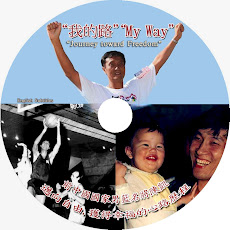
A True American(a free being), Former Pro-Basketball player in China, National Team, August 1st Team (1970-1979). Graduated from UCLA in Political Science, 1986. Staunch Anti-communism/socialism/despotism activist. Author of "One in a Billion - Journey toward Freedom". "My Way"(my life story)DVD produced and released in 2008 by NTDTV.
一个真正的美国人(自由人);前八一队、中国国家队男篮队员(1970-1979);1986年毕业于加州大学政治系;坚定的反共反专制/崇尚自由人士;【一比十亿】一书的作者;【我的路】四集视频(通往自由的旅程)2008年由新唐人电视台【人杰地灵】制作播放。
One in a Billion - Journey toward Freedom by Kai Chen "一比十亿--通往自由的旅程" 陈凯 著
Click Bookcover to Order Kai Chen's Autobiography: One In A Billion - Journey toward Freedom (The Story of a Pro-Basketball Player in China) 点击书面网上购书/陈凯自传“一比十亿--通往自由的旅程”(一个中国职篮球员的故事)
Never Forget 1989 Tiananmen Square Massacre 绝不要忘记中共反人类罪行:The Spirit of the Tank Man “坦克人”与天安门大屠杀视频
Click Photo to View Video Clips on Tank Man and Tiananmen Massacre 点击照片观看“坦克人”精神与六四天安门大屠杀视频
Global Museum on Communism 全球共产邪恶博物院 Learn/Educate Yourself on Evil of Communism 勿忘共产罪行,请点击如下链锁
Click DVD Cover to Watch Video "Killer Chic" (Chinese Subtitles, Translation by Kai Chen) 点击DVD画面观看视频" 崇魔的时尚"/陈凯访谈(中文字幕,陈凯翻译)
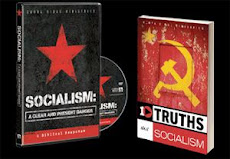
Video Program with Kai Chen Interview on Danger of Socialism in America 珊瑚崖对陈凯采访视频:社会主义对自由的不容置疑的威胁
Click Photo to View Video of Kai Chen Interview with Coral Ridge Ministries on Danger of Socialism in America 点击画面观看珊瑚崖圣训网的最新视频节目及对陈凯的个人采访 - 社会主义对自由的不容置疑的威胁
陈凯演讲: 从天安门广场到自由广场 Kai Chen Speech: From Tiananmen Square to Freedom Square
点击画面观看陈凯演讲: 从天安门广场到自由广场 Kai Chen Speech: From Tiananmen Square to Freedom Square
My Basketball Career in China 我的篮球生涯-八一男篮/国家男篮
Click Picture to See Photos from My Basketball Career in China 点击照片观看我的篮球生涯照片
“自由人”对抗“中国人”- 陈凯中文文摘集萃 Kai Chen's Signature Articles in Chinese - "Free Being vs. Chinese"
绝真实的丑态:一个崇尚虚无的受辱无尊严的奴才居然也每一刻都奢望着将造奴作奴的文化心态繁衍到世界的每一个角落。"Free Beings" vs. "Chinese" - Click photo to read Kai Chen articles in Chinese 点击照片阅读陈凯主要中文文章
屎虼螂的颂歌/陈凯谈中国专制文化心态 Sing in Praise of Dung Beetles/CK on China's Despotic Culture
Click Photo to Read Related Articles in Chinese on Chinese Despotic/Slave Culture/Mindset 点击屎虼螂图片阅读关于华语系人们专制心态与奴文化的中文文章
自由vs.专制 = 记忆vs.失忆 Freedom vs. Tyranny = Memory vs. Amnesia
Click Picture to See Wonderful Photos & Read the Article 点击照片观看陈凯“自由vs.专制 = 记忆vs.失忆”一文与家庭照片, 视频与文章
子女不是父母财产,人不是国家政府财产 Children Are Not Parents' Property, Human Beings Are Not Governments' Property
Click Picture to See Photos and Read the Article 点击照片观看陈凯“子女不是父母财产”一文与照片
从"文字笼罐"到"文字狱"-陈凯论中文的弊病危害 Chinese Language Fosters Despotism and Tyranny
Click Picture to Read All Articles about Chinese Language Defects and Harm 点击照片阅读所有关于中文语言弊病危害的文章
逐毛像签名录及媒体报道 Petition Signatures to Remove Mao Statue from Nixon Library/Museum & Media Coverage
请点击漫画进入签名录并阅读媒体报道 Click cartoon to view all the signatures on petition & read media coverage
Revisit 2007 Mao's Portrait Incident in Alhambra 重温2007年阿罕布拉市“毛像事件”
Click Painting to Review 2007 "Mao Portrait Incident" in Alhambra 点击画面重温2007年春节阿罕布拉市“毛像事件”
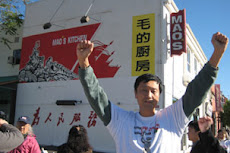
Protest at Mao's Kitchen 抗议道德腐败的“毛的厨房”
Click Picture to View Video, Photos and Article about "Mao's Kitchen" Protest 点击照片观看抗议“毛的厨房”的视频,照片与文章
Kai Chen Protests "Confucius Classroom" 陈凯抗议“孔学堂”
Click Photo to Review All Related Articles/Reports about Kai Chen Protesting "Confucius Classroom" in American Schools 点击照片阅读有关陈凯抗议“孔学堂”的文章与报道
Olympic Freedom T-shirt Global Movement 奥运自由衫全球运动
Click T-shirt to Learn about My Olympic Freedom T-shirt Global Movement Video Clips, Photos and Article. 点击自由衫观看视频,照片与文章
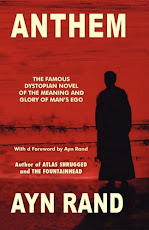
“国歌”- 安.兰德 著,陈凯 译 "ANTHEM" by Ayn Rand, Translation by Kai Chen
Click Bookcover to Read "Anthem" in Chinese, Translation by Kai Chen 点击书面阅读安. 兰德“国歌”一书,陈凯翻译
 www.kaichenblog.blogspot.com